 Save
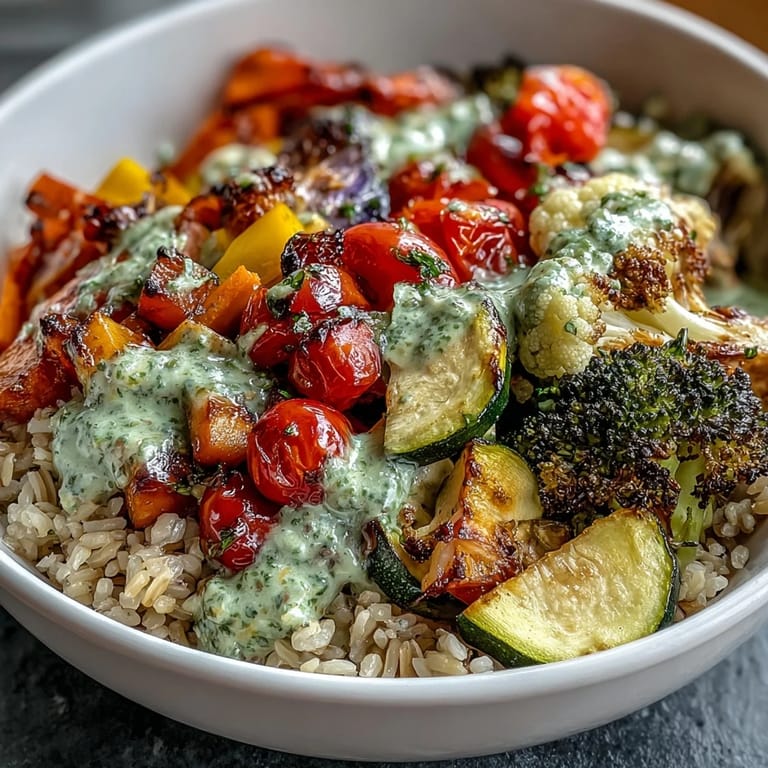
Save My kitchen smelled like caramelized vegetables and fresh herbs the afternoon my neighbor stopped by asking what I was making. I'd thrown together whatever colorful produce was sitting on the counter—red peppers, bright yellow squash, purple cauliflower—and roasted them until their edges turned golden and sweet. She took one bite of the finished bowl and asked for the recipe immediately. That's when I realized this simple combination had become something I made constantly, and it never got old because the vegetables changed with the seasons.
I made this for a potluck where everyone was supposed to bring something trendy and complicated. Instead, I showed up with these humble roasted bowls, and they vanished before the fancy appetizers did. A friend pulled me aside later asking if I'd teach her how to make it, because apparently her kids actually asked for seconds. That's the quiet magic of this recipe—it doesn't pretend to be something it's not, and somehow that honesty is what people crave.
Ingredients
- Red bell pepper: The sweetness deepens when roasted, creating those caramelized edges that feel almost like candy if you catch them at just the right moment.
- Yellow bell pepper: Slightly milder than red, it adds visual brightness and a subtle sweetness that balances the earthier vegetables.
- Purple cauliflower florets: Regular cauliflower works beautifully too, but purple adds that jewel-tone moment that makes the bowl feel special without extra effort.
- Broccoli florets: These get crispy and nutty when roasted, transforming into something you'd actually choose to eat rather than tolerate.
- Cherry tomatoes, halved: They burst slightly during roasting, releasing their juices to coat the pan—don't skip the halving or they'll roll away.
- Zucchini, sliced: Cut them into half-moons so they caramelize on flat sides and add textural contrast without getting mushy.
- Carrot, sliced: Thin rounds ensure they cook through completely; thicker pieces stay tough no matter how long you roast them.
- Olive oil: Two tablespoons is the bare minimum to get that golden, caramelized effect without the vegetables steaming instead of roasting.
- Brown rice: It has more texture and earthiness than white rice, standing up beautifully to the bright herb sauce.
- Fresh herbs (parsley, cilantro, basil): Use truly fresh herbs here—dried ones won't give you that alive, vibrant sauce that makes people ask what you did differently.
- Lemon juice: The acid is essential; it brightens everything and keeps the sauce from tasting heavy or one-dimensional.
- Extra virgin olive oil: For the sauce, this matters more than in the roasting oil; splurge here for a sauce with personality.
Tired of Takeout? 🥡
Get 10 meals you can make faster than delivery arrives. Seriously.
One email. No spam. Unsubscribe anytime.
Instructions
- Heat your oven while you prep:
- Set it to 425°F (220°C) and let it preheat fully—a properly hot oven is what creates those caramelized edges you're after. If you start with a cool oven, the vegetables steam instead of roasting, and you'll wonder why yours don't look like anyone else's.
- Arrange and dress your vegetables:
- Spread everything on a large baking sheet in a single layer, then drizzle with olive oil, salt, and pepper. Toss everything together with your hands so each piece gets coated—this matters more than you'd think.
- Roast until they tell you they're ready:
- Pop the sheet into your hot oven and set a timer for 15 minutes. Give everything a stir at the halfway point so the vegetables underneath get their turn in the heat. They're done when they're tender and the edges are golden brown, usually around 25 to 30 minutes total.
- Cook your rice while vegetables roast:
- Rinse brown rice under cold water first to remove excess starch, then combine it with 3 cups water and salt in a saucepan. Bring it to a boil, cover it, reduce heat to low, and let it simmer quietly for 30 to 35 minutes until all the water is absorbed and the grains are tender. Fluff it gently with a fork right before serving.
- Blend your herb sauce:
- Combine fresh parsley, cilantro, basil, lemon juice, one garlic clove, olive oil, salt, and pepper in a blender or food processor. Blend until it's completely smooth and vibrant green, stopping to scrape down the sides if needed. Taste it and adjust—sometimes you need a pinch more salt or a squeeze more lemon, depending on how flavorful your herbs were.
- Assemble your bowls:
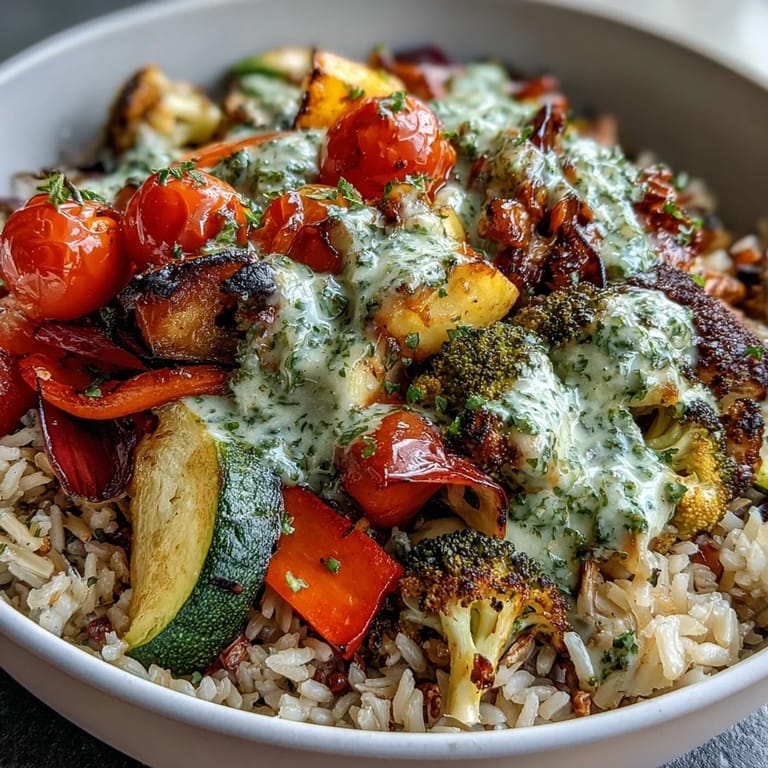
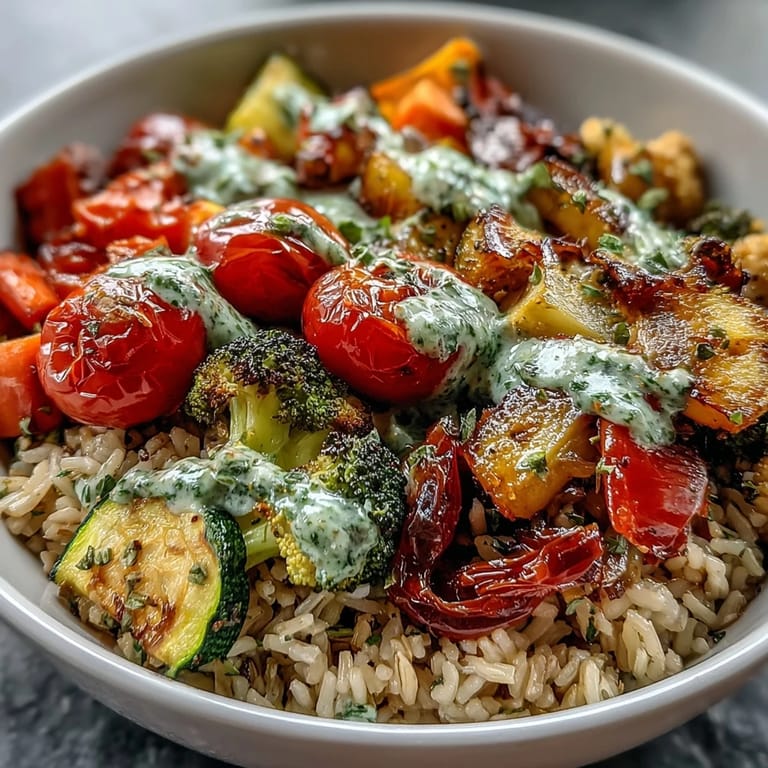
- Divide the fluffy brown rice into bowls, pile the roasted vegetables on top, and drizzle generously with herb sauce. Eat it right away while everything is still warm and the sauce hasn't settled to the bottom.
 Save
Save There's a moment when you're eating one of these bowls, where the warm rice, the crispy vegetables, and that cool herb sauce all hit your palate at once, and you realize you don't need meat or complicated techniques to feel satisfied. My partner actually looked up from his bowl one night and said, 'This tastes healthy but doesn't feel like punishment,'—which might be the highest compliment a vegetarian dish can receive.
The Beauty of Seasonal Swapping
The genius of this bowl is that it adapts to what's good right now. In fall, I roast cubed sweet potatoes and red onions alongside Brussels sprouts. In spring, asparagus and snap peas work wonderfully. Winter calls for thicker root vegetables cut larger so they caramelize properly. The structure stays exactly the same, but the flavors feel fresh and connected to the season, which somehow makes you feel more connected to your food.
Adding Protein Without Changing the Character
If you want to make this more substantial, chickpeas are the obvious choice—toss them with the vegetables before roasting so they get crispy on the outside. Cubed tofu works too, though you'll want to press it first and toss it with a bit of cornstarch so it browns instead of steams. I've also scattered sunflower seeds or pumpkin seeds over the top for a crunchy protein boost that doesn't fundamentally change the bowl's personality.
Why Fresh Herbs Make or Break This
The roasted vegetables have deep, concentrated flavors, and they need that bright green herb sauce to feel complete rather than heavy. If you use dried herbs, you'll end up with something that tastes flat and disconnected from the vegetables. Fresh herbs are non-negotiable here—they're not fancy, they're functional. When you taste the difference between a sauce made with fresh parsley and cilantro versus one made with dried, you'll understand why some recipes feel transformative and others just taste like food.
- Keep extra herb sauce in the fridge for drizzling over grains, roasted proteins, or even scrambled eggs throughout the week.
- If you can't find fresh basil, skip it rather than substituting dried—the parsley and cilantro are enough to carry the sauce.
- A small garlic clove is key; use more and the sauce becomes aggressive, less and it disappears entirely.
 Save
Save This bowl has become my answer when someone asks what to cook when you want something that feels nourishing but doesn't demand hours in the kitchen. Make it once and it'll find its way into your regular rotation.
Recipe FAQs
- → Can I prepare the vegetables ahead of time?
Yes, chop all vegetables up to 24 hours in advance and store in airtight containers in the refrigerator. Roast just before assembling for best texture and flavor.
- → What other vegetables work well in this bowl?
Sweet potatoes, red onions, asparagus, Brussels sprouts, or butternut squash all roast beautifully. Aim for colorful variety and cut vegetables into similar sizes for even cooking.
- → How long does the herb sauce keep?
The herb sauce stays fresh in the refrigerator for up to 5 days. Store in a sealed jar and give it a good stir before using. The flavors actually deepen after a day or two.
- → Can I use quinoa instead of brown rice?
Absolutely. Quinoa cooks faster in about 15-20 minutes and adds extra protein. Farro, barley, or wild rice would also work wonderfully as the grain base.
- → How do I add more protein to this bowl?
Chickpeas, white beans, or cubed tofu can be roasted alongside the vegetables. A dollop of hummus, sliced avocado, or toasted nuts also adds satisfying protein and healthy fats.