 Save
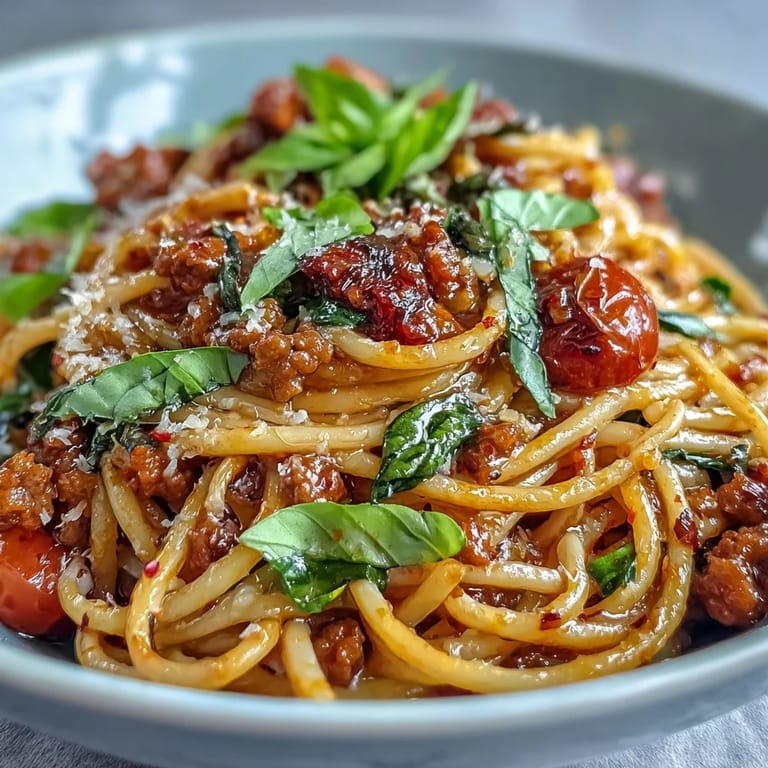
Save The first spoonful of this dish happened on a Tuesday night when I'd bought both sausage and a bottle of Chianti with no real plan. My roommate walked in as garlic and red pepper were sizzling in olive oil, and she said it smelled like Italy collided with our favorite Thai place. We opened the wine, poured half into the pan, and the kitchen filled with this deep, winey steam that made us both lean over the stove. That's when I knew this wasn't just dinner, it was the kind of accident you write down immediately.
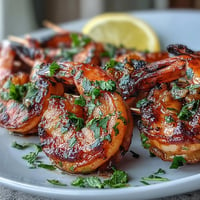
I made this for my brother's birthday once, doubling the recipe and using both sausage and shrimp because I couldn't decide. He doesn't usually notice what he's eating, but halfway through his second bowl he looked up and asked if I'd opened a restaurant without telling him. My sister-in-law has requested it every time they visit since, and now I keep a bottle of Chianti in the cupboard just in case.
Ingredients
- Spaghetti or linguine: Use whatever pasta shape makes you happy, but long noodles catch the sauce beautifully and twirl like you're in a movie.
- Extra-virgin olive oil: This is your flavor base, so use one you'd happily dip bread into.
- Yellow onion: Thin slices soften into sweet, winey ribbons that melt into the sauce.
- Garlic cloves: Freshly minced is non-negotiable here, the fragrance is half the magic.
- Red pepper flakes: Start with less if you're cautious, you can always add heat but you can't take it back.
- Italian sausage or shrimp: Sausage brings deep, fennel-laced richness, shrimp keeps it lighter and slightly sweet.
- Cherry tomatoes: They burst into jammy pockets of sweetness that balance the wine and soy.
- Tomato paste: A small spoonful adds concentrated umami and helps the sauce cling.
- Dry red wine: Chianti or Sangiovese are perfect, but any dry red you'd drink works beautifully.
- Soy sauce: This is the secret bridge between Italian and Asian, adding salty depth without shouting.
- Worcestershire sauce: It brings a quiet, tangy complexity that rounds out every bite.
- Balsamic vinegar: Just a teaspoon brightens the whole pan and cuts through the richness.
- Fresh basil: Torn by hand and stirred in at the end, it tastes like summer even in February.
- Parsley: Adds a fresh, grassy note that keeps the dish from feeling too heavy.
- Parmesan cheese: Grate it yourself if you can, the pre-shredded stuff doesn't melt the same way.
Tired of Takeout? 🥡
Get 10 meals you can make faster than delivery arrives. Seriously.
One email. No spam. Unsubscribe anytime.
Instructions
- Boil the pasta:
- Bring a large pot of salted water to a rolling boil and cook your pasta until just al dente, following the package timing. Before you drain, scoop out a mugful of that starchy pasta water, it's your secret weapon for a silky sauce.
- Heat the skillet:
- While the pasta bubbles away, get a large skillet hot over medium-high heat and swirl in the olive oil until it shimmers. You want the pan hot enough that the onions sizzle the moment they hit.
- Sauté the aromatics:
- Toss in the sliced onion and let it soften for a couple of minutes, stirring occasionally. Add the garlic and red pepper flakes, stirring constantly for about 30 seconds until the kitchen smells like a trattoria.
- Cook the protein:
- If using sausage, crumble it into the pan and cook for 5 to 7 minutes, breaking it into bite-sized pieces until it's browned and cooked through. For shrimp, cook them 2 to 3 minutes per side until they turn pink and opaque, then set aside briefly if the pan gets crowded.
- Add tomatoes and paste:
- Stir in the halved cherry tomatoes and tomato paste, cooking for about 2 minutes. Use your spoon to gently smash a few tomatoes so they release their sweet juices into the pan.
- Deglaze with wine:
- Pour in the red wine and scrape up all those flavorful browned bits stuck to the bottom of the skillet. Let it simmer for 2 to 3 minutes until it reduces by about half and smells rich and winey.
- Season the sauce:
- Stir in the soy sauce, Worcestershire, and balsamic vinegar, letting everything mingle for a moment. Taste it now and adjust with salt, pepper, or more red pepper if you want extra heat.
- Toss the pasta:
- Add the drained pasta straight into the skillet and toss everything together with tongs. Splash in the reserved pasta water a few tablespoons at a time until the sauce clings to each noodle like a glossy coat.
- Finish with herbs and cheese:
- Pull the pan off the heat and stir in the torn basil, chopped parsley, and grated Parmesan until it melts into the sauce. The residual heat will wilt the herbs just enough without losing their bright flavor.
- Serve and garnish:
- Divide the pasta among bowls and top with extra basil, a snowfall of Parmesan, sliced chili if you like fire, and a wedge of lemon for a squeeze of brightness. Serve it hot and watch people go quiet with their forks.
 Save
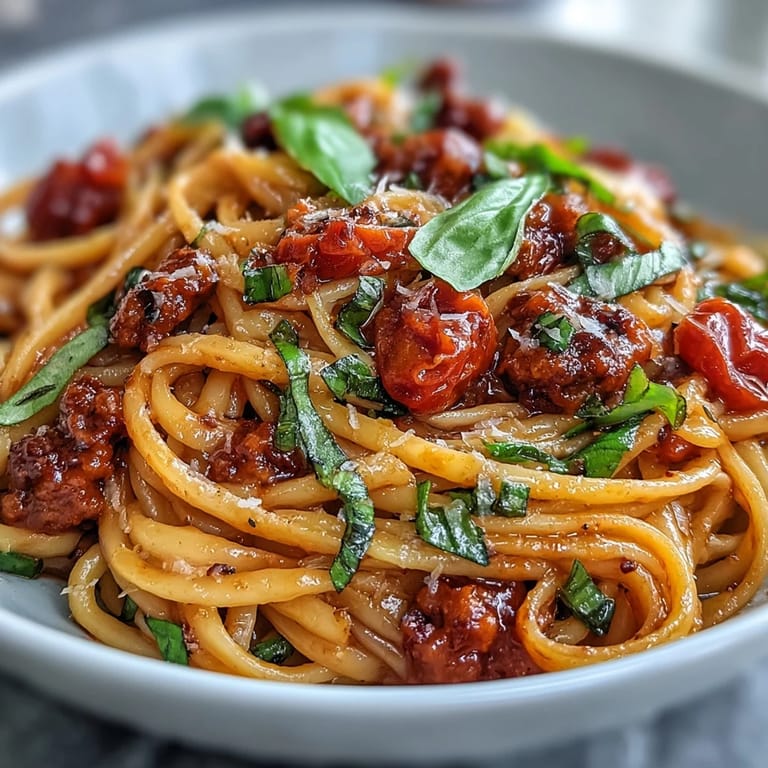
Save One night I made this for a friend who'd just moved across the country and was homesick for her mom's cooking. She took one bite, closed her eyes, and said it didn't taste like her mom's food but it tasted like someone cared. We finished the whole pan together on the couch with a bottle of wine, and she told me later that it was the first night she felt at home in her new city.
Make It Your Own
If you want to keep this vegetarian, skip the meat and sauté a couple of handfuls of sliced mushrooms until they're golden and meaty. I've also used crumbled marinated tofu with great results, just press it well so it crisps up in the pan. For a gluten-free version, swap in your favorite gluten-free pasta and double-check that your Worcestershire sauce is gluten-free too.
Storing and Reheating
Leftovers keep covered in the fridge for up to three days, and honestly they taste even better the next day when the flavors have had time to marry. When you reheat, add a splash of water or a glug of wine to the pan and warm it gently over medium-low heat, stirring until it loosens up. If you reheat in the microwave, cover the bowl with a damp paper towel so the pasta doesn't dry out.
Pairing and Serving Suggestions
This dish is rich and bold, so I like to serve it with a simple arugula salad dressed in lemon juice and olive oil to cut through the richness. A crusty baguette for mopping up the sauce is basically mandatory, and if you're feeling fancy, roasted broccolini or sautéed spinach on the side adds a pop of green. Pour the rest of that Chianti into glasses and call it a night.
- If you love heat, scatter thinly sliced fresh red chili over the top just before serving.
- A squeeze of fresh lemon juice right at the end brightens everything and makes the flavors sing.
- For a dinner party, double the recipe and serve it family-style in a big shallow bowl with extra Parmesan and basil in little dishes on the side.
 Save
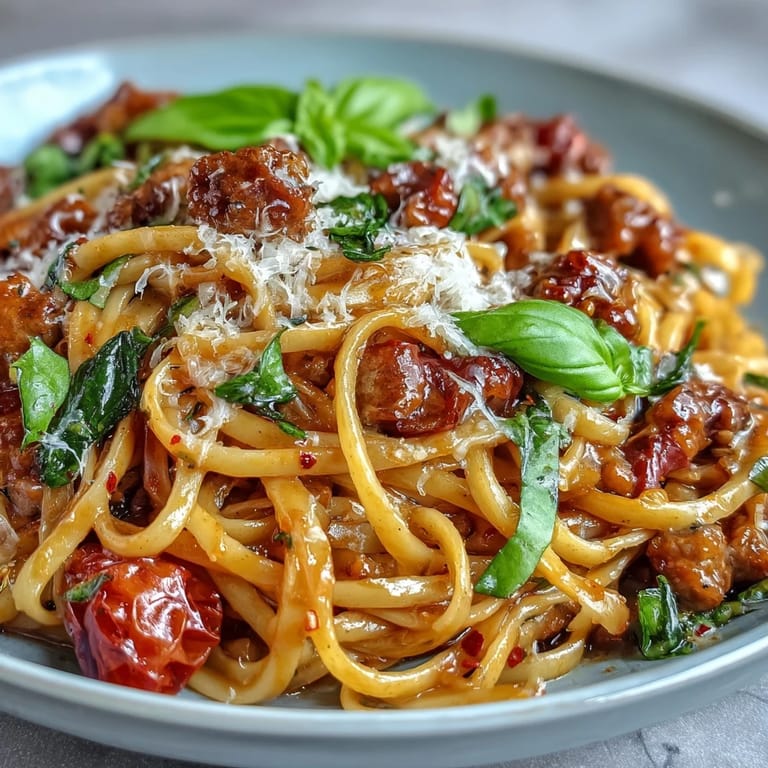
Save This recipe has become my go-to when I want to feel like I'm treating myself without a lot of fuss. It's messy, it's bold, and it tastes like the kind of dinner you'd remember long after the dishes are done.
Recipe FAQs
- → What makes these noodles Italian style?
Traditional Italian ingredients like Chianti wine, extra-virgin olive oil, garlic, onion, Parmesan, and fresh basil create the classic Italian foundation, while spaghetti or linguine replace the Asian rice noodles typically found in drunken noodle dishes.
- → Can I make this vegetarian?
Yes, simply omit the sausage or shrimp and substitute with sautéed mushrooms, marinated tofu, or even eggplant cubes for a hearty vegetarian version that still delivers rich umami flavors.
- → What type of wine works best?
Dry red wines like Chianti or Sangiovese are recommended for their authentic Italian profile, but any dry red wine such as Merlot or Barbera will work beautifully for deglazing and building the sauce base.
- → How spicy is this dish?
The spice level is adjustable based on the red pepper flakes—use one teaspoon for medium heat, reduce to half for milder flavor, or increase to two teaspoons or add fresh chilies for extra kick.
- → Can I prepare this ahead?
The sauce components can be prepared up to a day in advance and refrigerated, then reheated gently before tossing with freshly cooked pasta for the best texture and flavor.
- → What pasta shapes work well?
Long strands like spaghetti or linguine are traditional, but fettuccine, bucatini, or even penne will work—the key is choosing pasta that holds the wine-kissed sauce well.