 Save
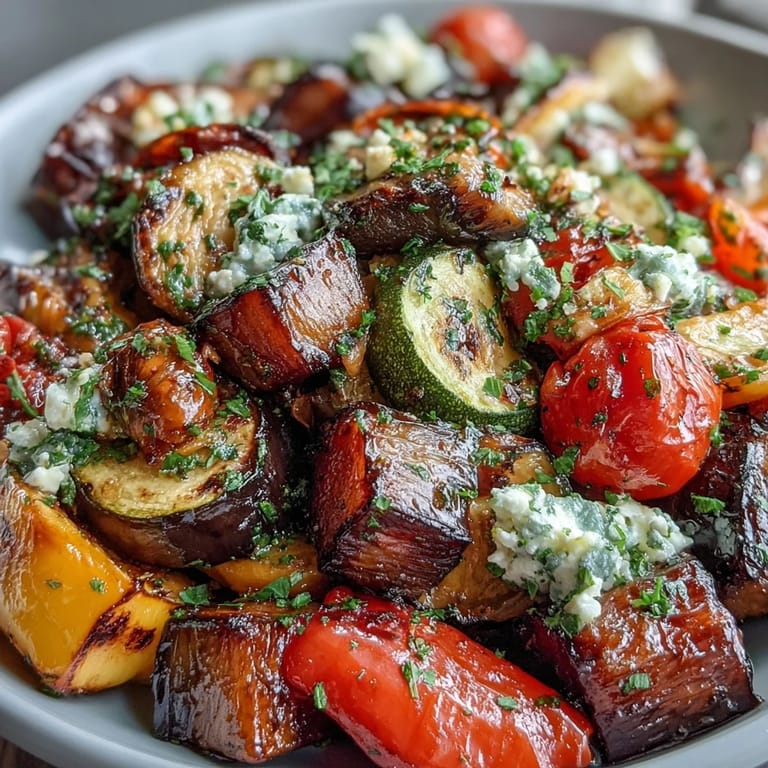
Save My kitchen smelled like a Greek hillside the evening I finally stopped overthinking roasted vegetables. I'd been treating them like a chore, tossing everything in at once and wondering why they turned soggy. Then a neighbor who grew up in Thessaloniki watched me work and simply said, "Give them space, let them breathe." That one shift turned a dull side into something I actually craved.
I made this for a summer dinner when half my guests were vegetarian and the other half suspicious of anything without meat. By the time I brought the platter to the table, the feta had melted slightly into the warm tomatoes and the smell of lemon and oregano filled the room. Everyone went quiet for a few minutes, then someone asked for the recipe before dessert even arrived.
Ingredients
- Eggplant: Cut into one inch cubes so they roast evenly and don't turn to paste, and don't worry about salting them unless they look especially seedy.
- Zucchini: Slice them thick or they'll vanish into the pan, half inch rounds hold their shape and soak up just enough oil.
- Red and yellow bell peppers: The sweetness comes out under high heat, and using both colors makes the dish look alive on the plate.
- Red onion: Wedges turn tender and slightly charred at the edges, adding a mellow sharpness that balances the tomatoes.
- Cherry tomatoes: Add these halfway through or they'll burst too early and make everything watery.
- Garlic: Six cloves sounds like a lot until you taste it roasted, then you'll wish you'd added more.
- Extra virgin olive oil: This is not the place for a neutral oil, the fruitiness matters here.
- Dried oregano, thyme, and rosemary: Crush the rosemary between your fingers before adding it so the flavor distributes instead of hitting in sharp bursts.
- Lemon juice: Drizzle it on after roasting, not before, so the brightness stays sharp and doesn't bake away.
- Kalamata olives: Optional but they add a briny punch that makes the whole dish feel more intentional.
- Feta cheese: Crumble it over the hot vegetables so it softens slightly without melting completely.
- Fresh parsley: Chopped at the last second, it adds a grassy freshness that cuts through the richness.
Tired of Takeout? 🥡
Get 10 meals you can make faster than delivery arrives. Seriously.
One email. No spam. Unsubscribe anytime.
Instructions
- Preheat and prep:
- Set your oven to 200°C and position the rack in the middle so the heat surrounds the vegetables evenly. Line your baking sheet with parchment if you hate scrubbing pans later.
- Toss the vegetables:
- In a large bowl, combine eggplant, zucchini, both peppers, and onion with olive oil, oregano, thyme, rosemary, salt, and pepper, using your hands to coat everything so no piece gets left dry. Spread them in a single layer on the baking sheet, leaving space between each piece so they roast instead of steam.
- First roast:
- Roast for twenty minutes until the edges start to brown and the kitchen smells like a taverna. Pull the pan out and gently stir or flip everything so the pale sides get their turn.
- Add tomatoes and garlic:
- Scatter the cherry tomatoes and minced garlic over the vegetables, tucking them into the spaces, then return the pan to the oven for another ten to twelve minutes. Watch for the tomatoes to blister and the garlic to turn golden.
- Finish and garnish:
- Remove from the oven and immediately drizzle with lemon juice, toss in the olives if using, then transfer to a platter and top with crumbled feta and parsley. Serve warm or let it sit at room temperature where the flavors will settle and deepen.
 Save
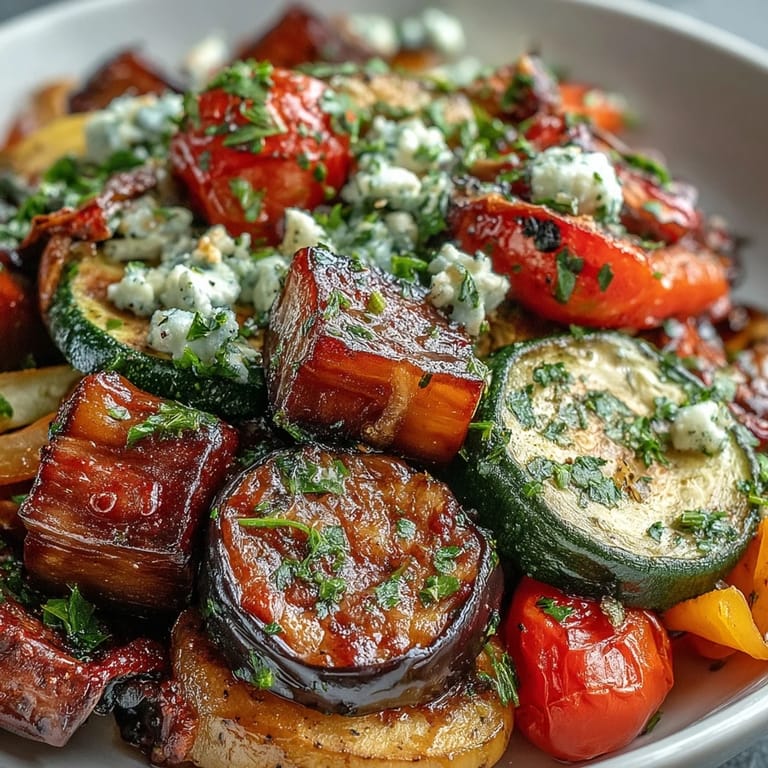
Save This dish became my fallback when I didn't know what people ate or what mood I was in. It worked beside grilled lamb, it worked as a main with crusty bread, and it worked cold from the fridge at midnight when I was too tired to reheat anything. Somehow it always tasted like I'd put in more effort than I actually had.
How to Get the Best Texture
The difference between limp roasted vegetables and ones with crispy edges comes down to spacing and temperature. I learned this after too many trays of sad, steamed zucchini that never browned. When vegetables touch, they release moisture and trap it, creating steam instead of the dry heat needed for caramelization. Spread them out, crank the oven high, and resist the urge to stir too early.
Make Ahead and Storage
You can chop everything the night before and store it in the fridge in a sealed container, then toss with oil and seasonings right before roasting. Leftovers keep for up to four days and actually improve as the flavors marry, making them perfect for grain bowls, wraps, or eaten straight from the container. Reheat gently in the oven or enjoy them cold, they hold up either way.
Serving Suggestions and Variations
I've served this alongside grilled fish, stirred it into pasta with a splash of the cooking water, and piled it onto flatbread with hummus. You can skip the feta and add toasted pine nuts for a vegan version, or toss in chickpeas halfway through roasting for extra protein. It's one of those recipes that adapts to what you have and what you're feeding.
- Serve with warm pita, tzatziki, and a simple green salad for a full vegetarian meal.
- Fold leftovers into scrambled eggs or an omelet for breakfast.
- Toss with cooked orzo or couscous and a handful of arugula for a grain bowl.
 Save
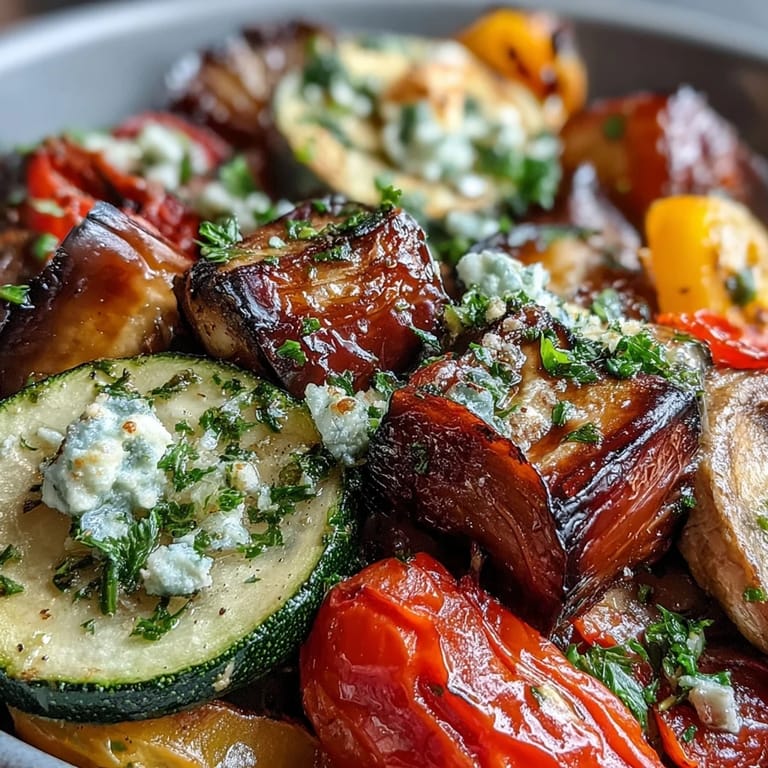
Save This is the kind of recipe that makes you look competent without much fuss, and it tastes like you spent the afternoon in a Mediterranean market. Make it once and you'll stop buying frozen vegetable medleys forever.
Recipe FAQs
- → Can I prepare these vegetables ahead of time?
Yes, you can chop and season all vegetables the night before and store them in the refrigerator. When ready to cook, simply spread them on the baking sheet and roast as directed.
- → What other vegetables work well in this roast?
You can add or substitute with vegetables like cauliflower, broccoli, sweet potatoes, or red potatoes. Just adjust roasting time accordingly—denser vegetables may need a few extra minutes.
- → How do I make this dish vegan?
Simply omit the feta cheese. For added protein and crunch, substitute with toasted pine nuts, walnuts, or a sprinkle of nutritional yeast before serving.
- → Can I grill the vegetables instead?
Absolutely. Cut vegetables into larger slices for grilling and cook over medium-high heat, turning occasionally, until tender and charred—about 10-15 minutes depending on the vegetable.
- → How long do leftovers keep?
Store in an airtight container in the refrigerator for up to 4 days. The flavors actually improve after sitting, and the vegetables can be eaten cold, at room temperature, or gently reheated.
- → What can I serve with this dish?
These vegetables pair wonderfully with grilled chicken, lamb, or fish. They're also delicious tucked into pita bread, served over quinoa or rice, or alongside a simple green salad.