 Save
Save The first time I truly understood schnitzel wasn't from a recipe book, but from watching my neighbor Maria patiently pound veal at her kitchen counter, the rhythm so meditative it felt almost musical. She explained that the meat had to be paper-thin, almost fragile, so that it would cook through in mere minutes while the breadcrumb crust stayed golden and crackling. That afternoon, the smell of clarified butter filling her small Vienna apartment made me realize this wasn't just food—it was a masterclass in restraint and precision wrapped in nostalgia.
I made this for my partner one quiet Sunday, and I remember the exact moment the second schnitzel hit the pan—the sizzle was so satisfying that we both stopped talking just to listen. The kitchen filled with warmth, and something about the simplicity of it all felt grounding, like we'd stumbled onto a secret that Austrian grandmothers had been keeping for generations.
Ingredients
- Veal cutlets: Four pieces, each about 150 grams, are what you need; pounding them to exactly 1/4 inch thickness is the secret to fast, even cooking without drying them out.
- All-purpose flour: This creates the adhesive layer between meat and breadcrumbs, so don't skip it or rush past it.
- Eggs and milk: Beat these together to make a custard-like bath that helps the breadcrumbs cling; the milk loosens the eggs and prevents them from cooking too fast.
- Fine dry breadcrumbs: Use the finest breadcrumbs you can find because they brown more evenly and create that signature delicate crust.
- Clarified butter or neutral oil: This is non-negotiable; clarified butter tastes better and has a higher smoke point, and you need enough so the schnitzel can almost swim in it.
- Lemon wedges: Fresh lemon is essential, cutting through the richness with brightness that makes every bite sing.
- Fresh parsley: Optional but worth it for a whisper of green and a final flourish of flavor.
Tired of Takeout? 🥡
Get 10 meals you can make faster than delivery arrives. Seriously.
One email. No spam. Unsubscribe anytime.
Instructions
- Pound the veal gently until it's paper-thin:
- Place each cutlet between plastic wrap and use steady, even pressure with your meat mallet, working from the center outward. Pat the meat completely dry with paper towels afterward because any moisture will cause splattering and prevent browning.
- Set up your breading station with three shallow dishes:
- Arrange them in a line: flour first, then the egg and milk mixture in the middle, and breadcrumbs last. Having everything ready before you start breading means you'll work quickly and cleanly.
- Bread each cutlet with a light, loose touch:
- Coat in flour, shake off excess, dip in egg, then press gently into breadcrumbs without crushing them down. The loose coating is what gives you that shatteringly crisp exterior.
- Heat your fat until it's shimmering and alive:
- The butter or oil should be hot enough that a piece of breadcrumb sizzles immediately when it hits the pan. Work with medium-high heat to achieve that golden color in just 2 to 3 minutes per side.
- Fry with patience, tilting and basting as you go:
- Use a slotted spatula and spoon the hot fat over the top of each schnitzel as it cooks, which ensures even browning and prevents the breadcrumbs from burning while the inside cooks through. Never crowd the pan; each piece needs space to breathe.
- Drain briefly and serve while the crust is still crackling:
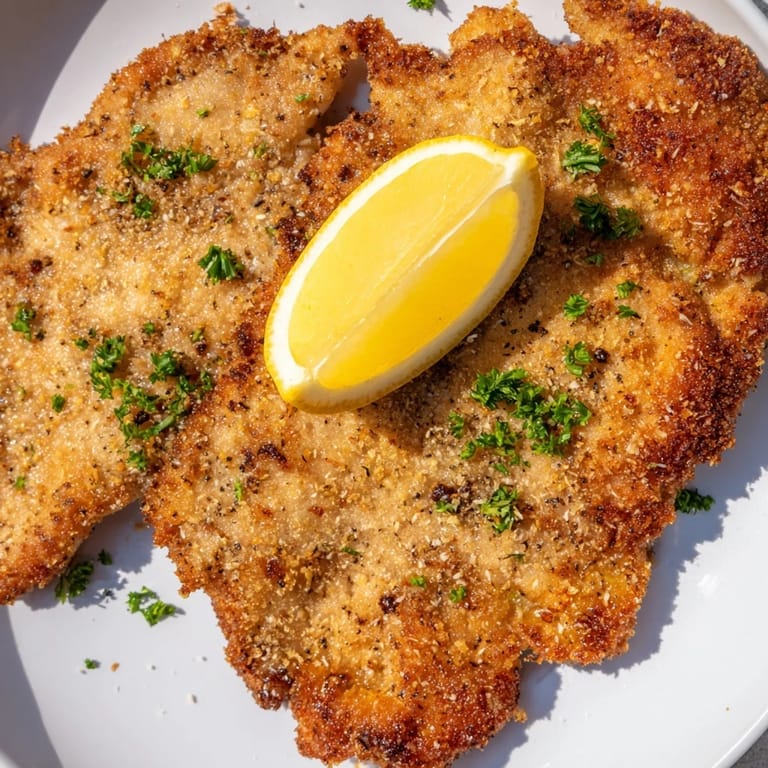
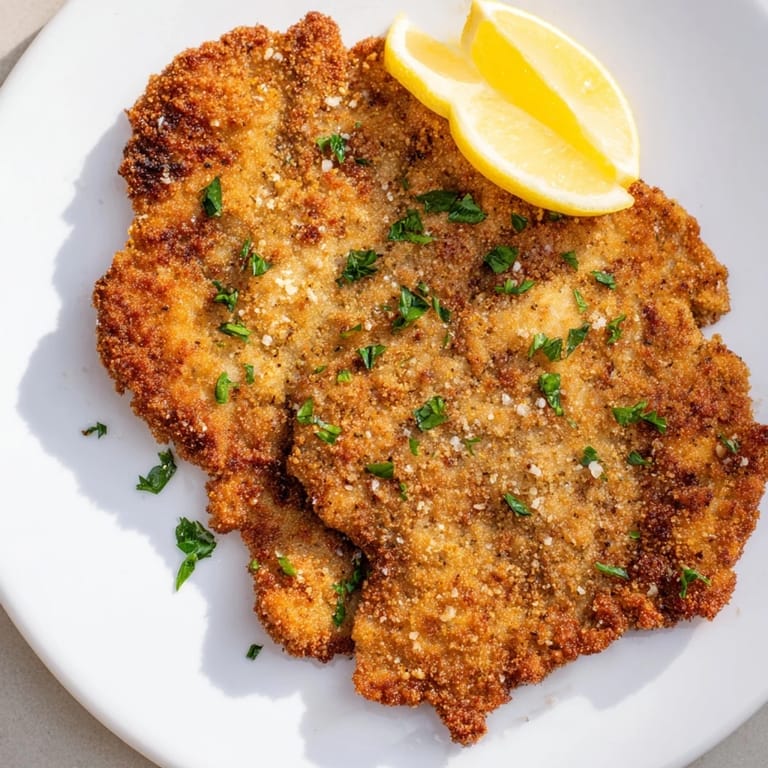
- Lift each schnitzel onto paper towels for just a moment to release excess fat, then transfer to a warm plate. The moment between the pan and the plate is sacred—serve it immediately with lemon and parsley.
 Save
Save There was one evening when my friend arrived unexpectedly hungry, and I made this schnitzel in under thirty minutes from start to finish. By the time he'd finished telling me about his day, I was plating the food, and when he took that first bite, the crunch of the crust made him pause mid-sentence. That's when I knew the recipe had worked—when the food becomes a moment people remember, not just something they eat.
The Rhythm of Pounding
Pounding veal properly is an art form that seems to intimidate home cooks more than it should. The key is to use steady, even strokes rather than aggressive whacking; you're not trying to tenderize through brute force but rather gently extending the muscle fibers until they're thin and delicate. Think of it like spreading softened butter across bread—deliberate and smooth, not frantic. Once you find that rhythm, pounding becomes meditative, and you'll notice the meat beginning to tell you when it's reached the perfect thickness by how easily it spreads under your mallet.
Why Clarified Butter Matters
Clarified butter is simply butter with the water and milk solids removed, leaving behind pure fat with a higher smoke point, which means it can get hotter without burning and turning bitter. This matters because schnitzel needs aggressive heat for that golden crust, and whole butter would smoke and scorch before the inside of the veal cooked through. The flavor difference is subtle but undeniable—there's a nuttiness that regular oil can't replicate, and once you taste it, you'll understand why Vienna never settled for anything less.
Serving Secrets and Sides
In Austria, schnitzel never arrives alone; it travels with companions that balance its richness. The traditional potato salad is creamy and vinegary, the cucumber salad is cool and refreshing, and the lingonberry jam (if you can find it) adds a tart, slightly sweet note that somehow completes the picture. Even a simple green salad with a sharp vinaigrette transforms the meal, and lemon wedges are absolutely essential because their brightness is what keeps every bite from feeling heavy despite all that beautiful fat.
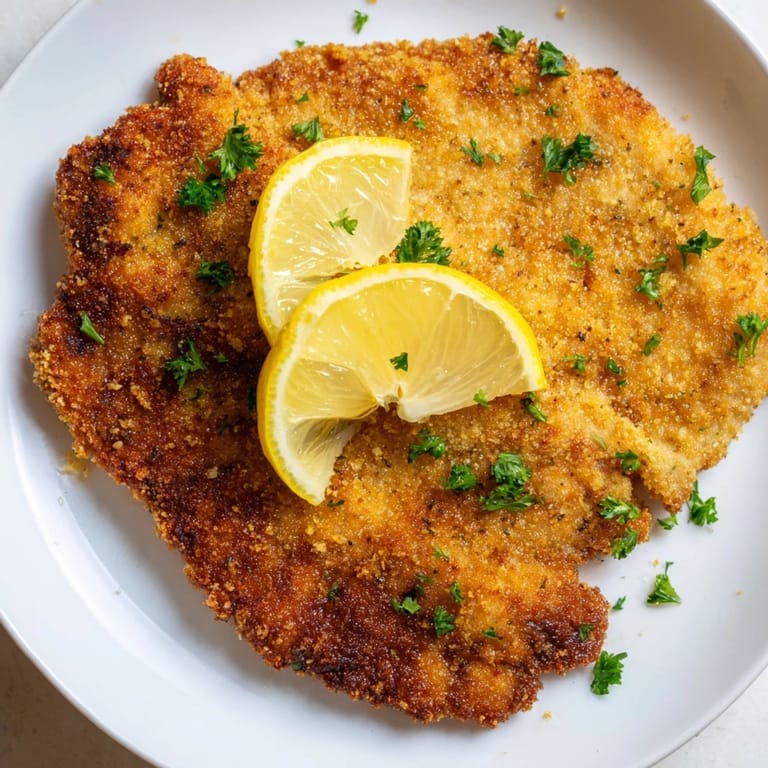
- Serve the schnitzel immediately after it leaves the pan, when the crust is still crackling and hasn't yet softened.
- Always have fresh lemon at the table, and encourage people to squeeze it generously over their portion.
- If you're feeding a crowd, keep finished schnitzels warm in a low oven while you finish frying, but don't cover them or they'll steam and lose their crispness.
 Save
Save Schnitzel teaches you that sometimes the most elegant dishes come from respecting simple ingredients and nailing the fundamentals. Once you've made it a few times, it becomes the meal you turn to when you want to feel confident and capable in the kitchen.
Recipe FAQs
- → What type of meat is used for Wiener Schnitzel?
Veal cutlets are the traditional choice, pounded thin to ensure tenderness and even cooking.
- → How do you achieve a crispy coating on the cutlets?
By lightly breading the veal with flour, dipped eggs, and fine dry breadcrumbs without pressing, then frying in hot clarified butter or oil for a golden crust.
- → Why is pounding the meat important?
Pounding the cutlets to about 1/4 inch thick tenderizes the meat and promotes uniform cooking.
- → What fats are best for frying Schnitzel?
Clarified butter is preferred for its rich flavor and high smoke point, but a neutral oil with a high smoke point works well too.
- → How should Wiener Schnitzel be served?
Traditionally with lemon wedges and optionally sprinkled with fresh parsley, often accompanied by potato or cucumber salad.
- → Can other meats be used instead of veal?
While veal is classic, pork or chicken variants exist but differ from authentic Wiener Schnitzel styling.