 Save
Save The first time I truly understood why mussels matter was on a rainy Brussels evening, watching a neighbor steam them in her kitchen while the aroma of garlic and white wine wrapped around everything. She didn't fuss or measure obsessively—just opened a bottle, threw in what looked right, and let the mussels tell her when they were ready by opening up. That simplicity stuck with me, and now I make this dish whenever I want to feel like I'm cooking something both elegant and effortless.
I made this for friends who swore they didn't like seafood, and something about the simplicity changed their minds—maybe it was the way the steam rose from the pot when I lifted the lid, or how the white wine made everything taste a little less intimidating. They went through two whole kilos without hesitation, and suddenly we were all eating with our hands, laughing, and fighting over the last of the broth.
Ingredients
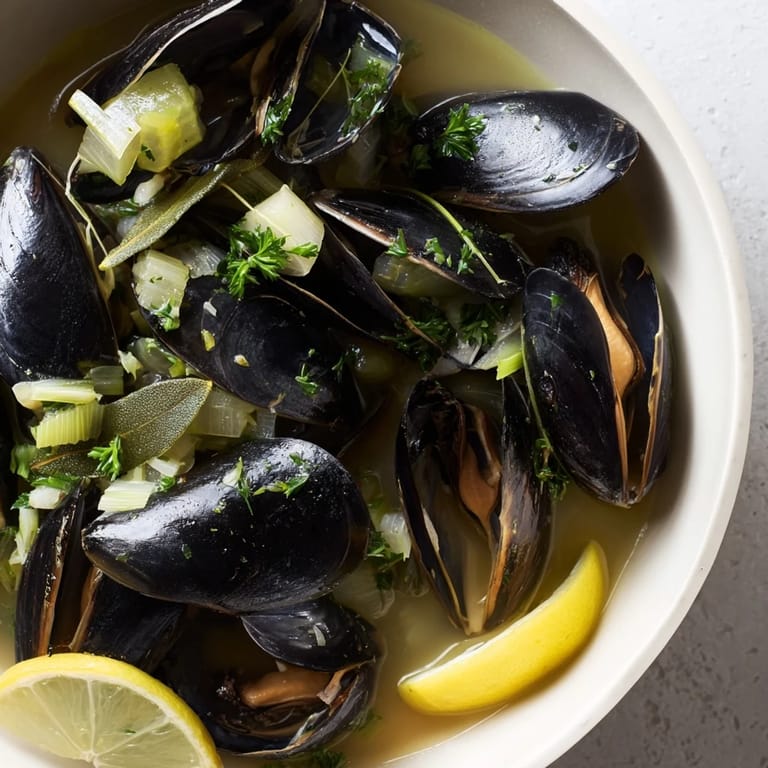
- Fresh live mussels (2 kg): Buy them the same day you cook—they're living creatures and need that respect. Look for ones that feel heavy and close tightly when tapped; the ones that stay open are already gone.
- Shallots (2 medium): They soften into something almost sweet when sautéed, creating the flavor base that makes everything work together.
- Garlic (2 cloves): Mince it fine so it distributes evenly and becomes part of the background rather than a loud note.
- Leek and celery: These quiet vegetables add depth and minerality without stealing the show from the mussels and wine.
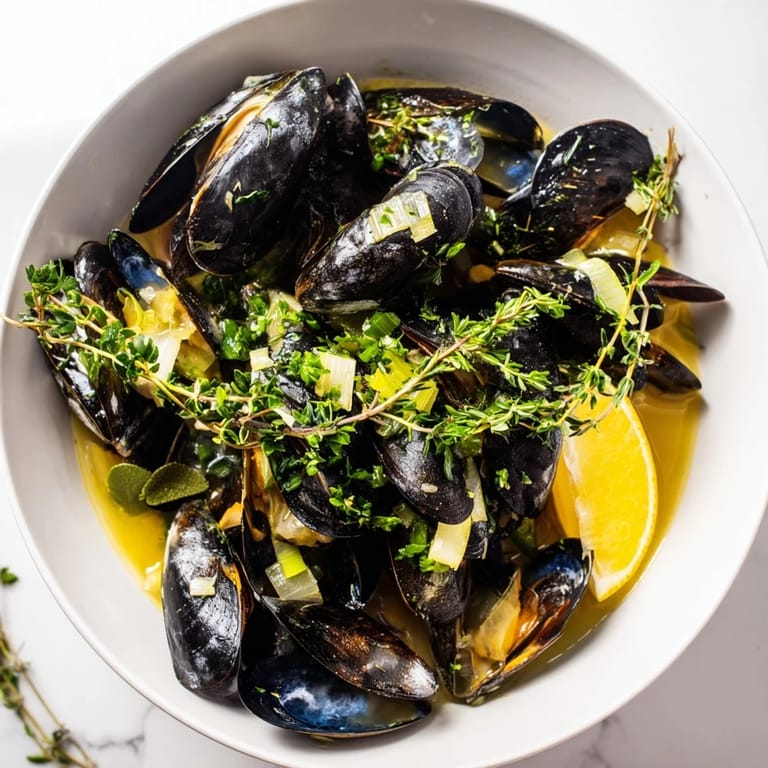
- Fresh parsley and herbs: Add these at the very end so their brightness doesn't cook away into nothing.
- Dry white wine (300 ml): Something you'd actually drink—not "cooking wine," but a real bottle because it matters to the final taste.
- Olive oil (2 tbsp): Good enough to taste on bread, because it will be the fat carrying all those flavors.
- Black pepper and sea salt: Mussels are already briny, so taste as you go rather than seasoning heavy-handed at the start.
- Lemon wedges: Essential—they brighten the entire dish and cut through the richness beautifully.
Tired of Takeout? 🥡
Get 10 meals you can make faster than delivery arrives. Seriously.
One email. No spam. Unsubscribe anytime.
Instructions
- Clean and inspect your mussels:
- Rinse them under cold running water with your fingers, rubbing gently to remove any sand or debris. Discard any that are cracked or stay open when tapped—these are already dead and will ruin your broth. This takes five minutes and it matters.
- Build your flavor foundation:
- Heat olive oil in a large pot over medium heat, then add the shallots, garlic, leek, and celery. Let them soften for 3–4 minutes until the whole kitchen smells like a French kitchen, then add the thyme and bay leaf. You're creating the bed that will cradle the mussels.
- Add wine and bring to life:
- Pour in the white wine and let it come to a gentle simmer for just a minute so the alcohol cooks off slightly. The smell will tell you when it's ready—that moment when the raw wine smell softens into something inviting.
- Steam the mussels open:
- Add the cleaned mussels, cover the pot tightly with a lid, and crank the heat to high. After about 5–7 minutes, lift the lid carefully—watch the steam rise and listen to them opening. Shake the pot once or twice if they seem shy. Any that refuse to open get thrown away without guilt; they're protecting you from something not fresh.
- Finish with care:
- Remove from heat, stir through the chopped parsley so it stays bright and fresh, then taste the broth before adding salt. Season with black pepper generously. If it tastes thin, whisper a little butter in at the end, but it's not necessary if you've cooked this right.
- Serve immediately:
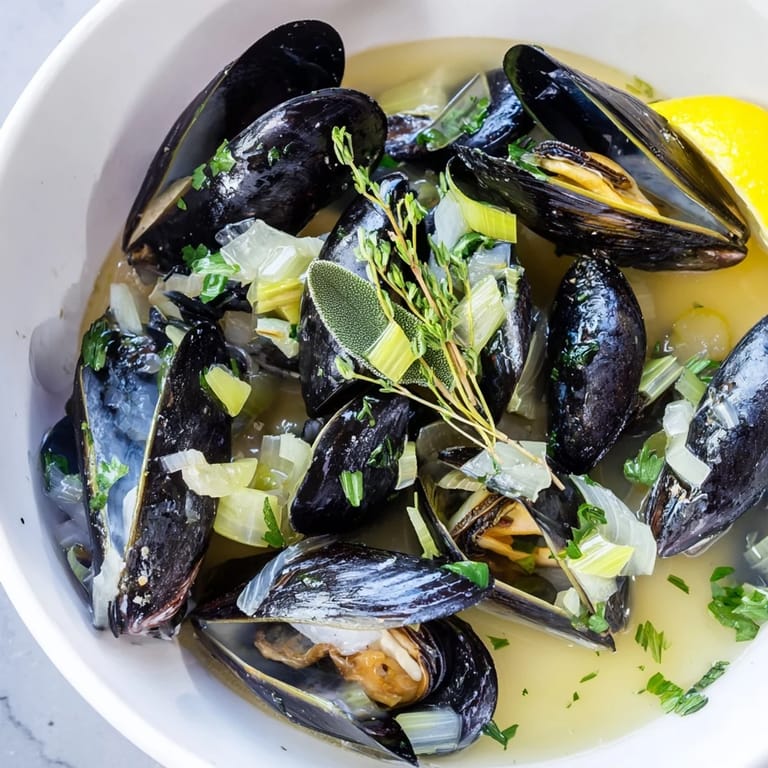
- Divide mussels and broth into deep bowls, add lemon wedges, and eat while everything is hot and the shells still feel warm in your hands.
 Save
Save There's a moment when you're eating this with someone you care about, bread in one hand, a shell in the other, dipping and soaking and making a beautiful mess, where you stop thinking about technique and remember why cooking exists in the first place. It's connection wrapped in steam and salt water.
The Broth Is Everything
Don't let anyone tell you the broth is just a byproduct—it's the real prize. Mussels release their essence as they cook, turning that white wine into something briny and complex that tastes like the ocean distilled into liquid form. I've watched people eat through entire mussels just for the reason to keep dipping bread into the bowl, which is exactly the point. If you end up with leftover broth, freeze it and use it as the base for seafood soups or risotto, where it will make you feel like a restaurant kitchen is happening in your home.
Why This Dish Feels Fancy But Isn't
Mussels look impressive but require almost no skill—there's no searing, no temperature anxiety, no way to really mess this up if you're paying attention. What makes it feel restaurant-quality is the restraint: good ingredients treated simply, cooked just until done, and served immediately. This is the kind of dish that taught me that elegance isn't about complexity, it's about respecting what you're cooking and not overcomplexing it.
Variations and Companions
This recipe is a foundation, not a prison. I've made it with a splash of cream for richness, a handful of saffron threads for color and depth, or extra garlic when I wanted it more aggressive. Serve it with crusty bread for soaking, Belgian fries with mayonnaise for the classic pairing, or over pasta if you want something more substantial. Some nights it's a starter that impresses; other nights it's the whole meal, and both are completely valid.
- A squeeze of cream or a pat of butter at the end transforms the broth into something silkier without making it heavy.
- Belgian fries and mayonnaise on the side turn this into the classic street-food version that changed my life when I first ate it.
- Keep good bread nearby—it's not optional, it's essential to the entire experience.
 Save
Save This dish proves that sometimes the most satisfying meals come from the fewest ingredients and the most attention. Make it when you want to feel like you're cooking something that matters.