 Save
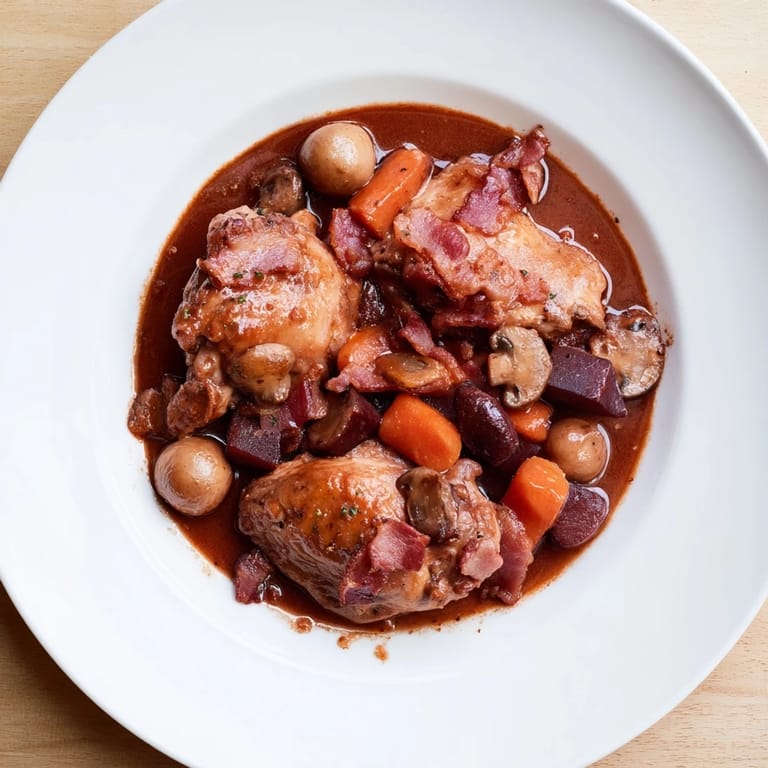
Save There's something almost meditative about coq au vin—the way the kitchen fills with that deep wine-and-thyme perfume as it braises low and slow. I discovered this dish during a particularly gray November when I needed comfort that felt deliberate, something that demanded time and attention. My grandmother had mentioned it once in passing, the way she described it made it sound impossibly fancy, but the first time I actually made it, I realized it's really just chicken and wine having a long conversation. That revelation stuck with me.
I made this for friends on a night when I wanted to prove something to myself about cooking without recipes, and it worked—though I'll admit I texted my sister halfway through in a small panic about whether the wine was supposed to smell like that. It was. The moment people tasted it, something shifted in the room; it became the kind of meal that lingers in memory, not because it's complicated, but because it tastes like someone cared.
Ingredients
- 1 whole chicken, cut into 8 pieces: Thighs and drumsticks stay more forgiving than breasts, but I use the whole bird for flavor.
- 150 g smoked bacon or pancetta, diced: This is where the savory depth starts; don't skip it or rush it.
- 200 g pearl onions, peeled: Tedious to peel, but they stay intact and sweet through the braise in a way larger onions won't.
- 250 g cremini or button mushrooms, cleaned and quartered: Sautéing them separately means they stay tender instead of becoming waterlogged.
- 2 medium carrots, sliced: They soften completely and almost melt into the sauce if you give them time.
- 2 garlic cloves, minced: Just enough to whisper, not shout.
- 750 ml dry red wine: Burgundy or Pinot Noir works; whatever you'd drink is good enough for the pot.
- 250 ml chicken stock: Homemade is ideal, but decent store-bought won't betray you.
- 2 tbsp tomato paste: A small amount that adds umami and helps thicken the sauce naturally.
- 2 tbsp all-purpose flour: Mixed with tomato paste, it creates a light thickener without cornstarch.
- 2 tbsp olive oil and 2 tbsp unsalted butter: Butter at the end adds richness; olive oil starts the bacon.
- 2 bay leaves and 4 sprigs fresh thyme: The backbone of the flavor—dried herbs won't give you the same fragrance.
- Salt and freshly ground black pepper: Season at the beginning and at the end; this dish needs balance.
Tired of Takeout? 🥡
Get 10 meals you can make faster than delivery arrives. Seriously.
One email. No spam. Unsubscribe anytime.
Instructions
- Dry and season the chicken:
- Pat each piece with paper towels—this matters more than you'd think because dry skin browns, and browning is flavor. Season generously.
- Render the bacon until crisp:
- Use a large Dutch oven or heavy pot over medium heat with 1 tbsp olive oil. The bacon fat is your foundation; let it get golden and fragrant before you remove it with a slotted spoon.
- Brown the chicken in batches:
- Don't crowd the pot; let each piece sit undisturbed for a minute or two until it's golden. This takes patience, but it's the only real technique in the whole dish.
- Sauté the aromatics:
- Add carrots, pearl onions, and garlic to the same pot. They should sizzle softly for about 5 minutes until they just begin to turn golden at the edges.
- Make a paste with tomato paste and flour:
- Stir it in for about a minute. This is when you might think something's wrong because the pot looks thick and pasty—but it's exactly right.
- Reassemble and add the braising liquid:
- Return the chicken and bacon, then pour in the wine and stock. Scrape the bottom of the pot to release all those browned bits, which dissolve into the sauce. Add bay leaves and thyme.
- Braise low and slow:
- Bring to a simmer, cover, and cook on low heat for about 1.5 hours. The chicken will go from firm to fall-apart tender; you'll know it's ready when a fork passes through the meat with almost no resistance.
- Cook the mushrooms separately:
- While the chicken braises, heat 1 tbsp butter and 1 tbsp olive oil in a skillet over medium-high heat. Add the mushrooms and don't stir for the first couple of minutes—let them get brown and almost caramelized on one side before turning them.
- Finish the sauce:
- Remove the lid for the last 15 minutes so the sauce thickens slightly and concentrates. Stir in the sautéed mushrooms, taste, and adjust salt and pepper.
- Serve:
- Fish out the bay leaves and thyme sprigs, ladle everything into bowls, and breathe in that moment before the first spoonful.
 Save
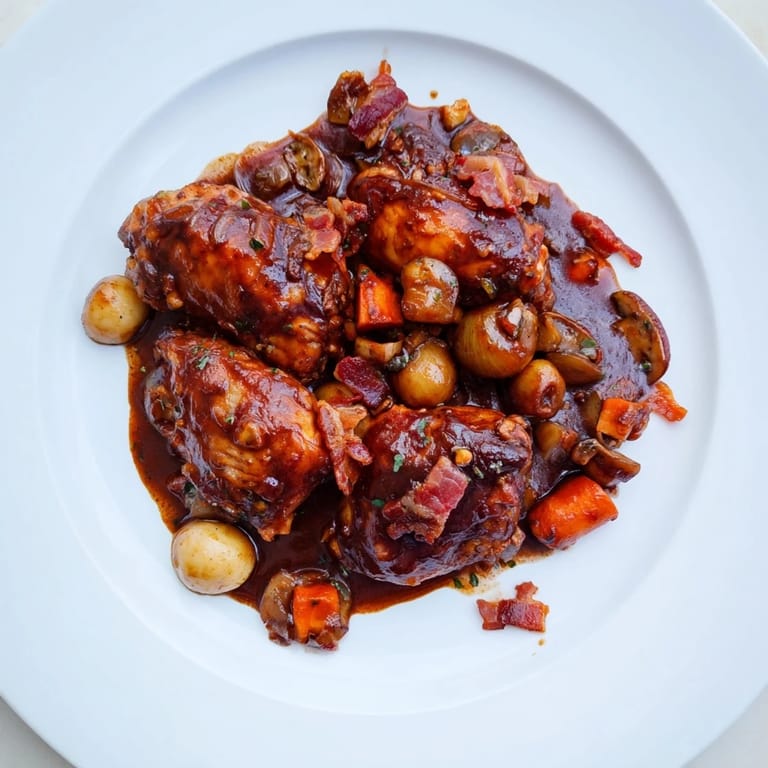
Save There was a moment, about an hour into cooking, when my kitchen smelled so good that I had to call someone just to describe it. That's what this dish does—it fills the space around you with something that feels intentional and warm. By the time it was ready, I wasn't just hungry; I was present in a way that cooking rarely makes you feel.
Why Red Wine Matters
The wine isn't just liquid; it's an ingredient that transforms. A light wine will give you something delicate and fruity, while a Pinot Noir or Burgundy brings earthiness and tannins that age into the sauce. The acidity cuts through the richness of the bacon and butter so the dish never feels heavy, even though it absolutely is. Don't use anything you wouldn't drink—the flavor lives there.
The Pearl Onion Question
Pearl onions are optional, but they're worth the effort because they stay whole and sweet, almost candy-like by the end. If you can't face peeling them, you can blanch them first to loosen the skins, or honestly, use shallots instead and cut them in half. The point is softness and sweetness, not a specific shape.
Serving and Variations
Crusty bread is almost required because the sauce is too good to leave behind. Mashed potatoes work beautifully, or buttered egg noodles if you want something more tender. The dish is forgiving enough that it reheats perfectly, which means you can make it the day before without guilt.
- Add a splash of brandy when sautéing the mushrooms if you want an extra layer of richness and warmth.
- Chicken thighs alone will give you something juicier than using the whole bird, though you'll lose that lovely variety of textures.
- Gluten-free flour works fine if you swap it in; just use slightly less because it thickens differently.
 Save
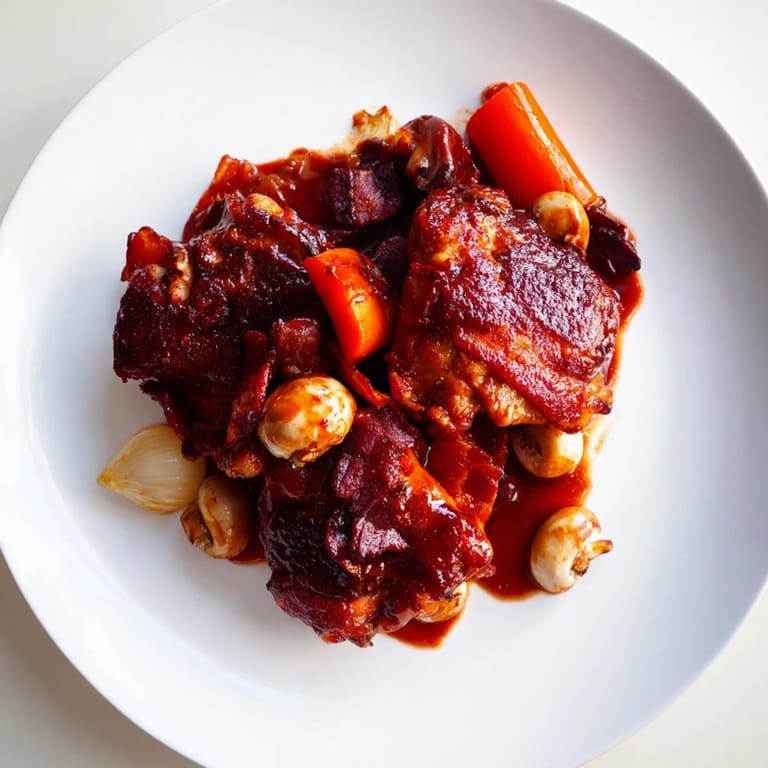
Save Coq au vin is patient food, and that patience is its gift. Make it when you have time to let it happen, and it will give you something that tastes like it took twice as long.
Recipe FAQs
- → What type of wine is best for braising?
Dry red wines like Burgundy or Pinot Noir complement the dish, enhancing its depth without overpowering the flavors.
- → Can I use chicken thighs instead of whole chicken?
Yes, chicken thighs work well due to their tenderness and ability to absorb the rich sauce during slow cooking.
- → How do I ensure the sauce has a good thickness?
Cooking the flour with tomato paste and reducing the sauce during the final minutes concentrates flavors and thickens the sauce naturally.
- → What is the purpose of sautéing mushrooms separately?
Sautéing mushrooms beforehand helps develop a rich, caramelized flavor that enhances the overall dish without becoming soggy.
- → Are there any suggested side dishes to serve?
Traditional sides include crusty French bread, mashed potatoes, or buttered noodles, which soak up the flavorful sauce beautifully.