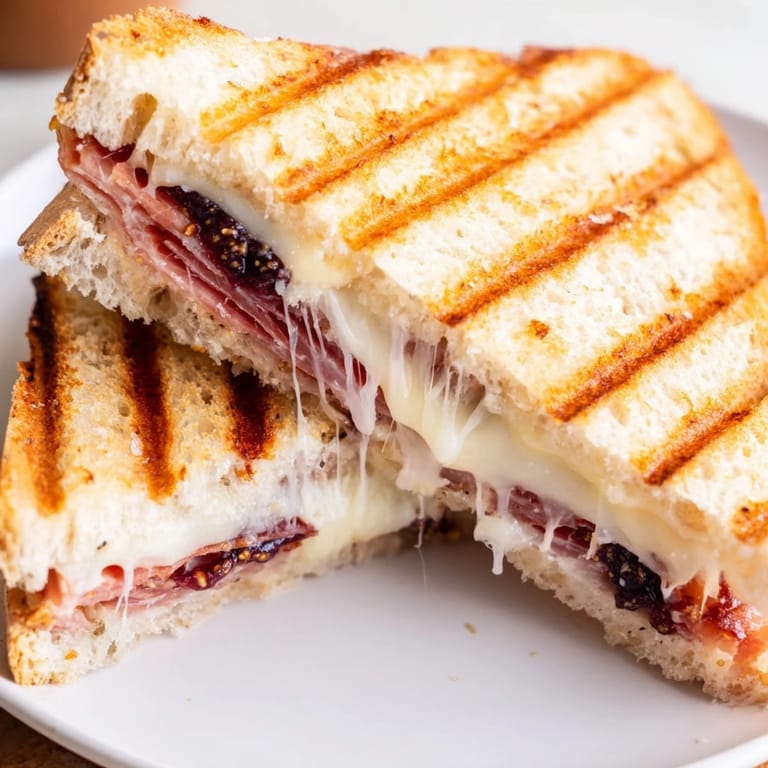
 Save
Save There was a sandwich shop near my old apartment that charged fifteen dollars for a panini I could never quite forget. The owner would barely look up as he assembled it, but every bite tasted like he'd been making it for decades. One Sunday, I bought the ingredients myself and realized the magic wasn't complicated at all. It was just good bread, the right cheese, and not overthinking it.
I made this for my sister once when she came over unannounced, hungry and impatient. She stood in the kitchen watching me butter the bread, skeptical that anything good could happen that fast. When I handed her half, still warm and oozing cheese, she stopped mid-bite and just nodded. We didn't talk much after that, just ate. Sometimes a sandwich is enough.
Ingredients
- Rustic Italian bread: Ciabatta or sourdough works best because the crust crisps beautifully under pressure, and the inside stays tender enough to soak up a little of the jam without getting soggy.
- Fig jam: This is where the sweetness comes from, and it should be thick enough to spread without sliding out when you press the sandwich.
- Fontina cheese: It melts smoothly and has a buttery, nutty flavor that doesn't overpower the prosciutto; mozzarella works if you want milder, taleggio if you want funk.
- Prosciutto: Paper thin and salty, it crisps slightly at the edges when heated and balances the jam perfectly.
- Unsalted butter: Softened butter spreads easily and creates that golden, crackling crust when the sandwich hits the heat.
Tired of Takeout? 🥡
Get 10 meals you can make faster than delivery arrives. Seriously.
One email. No spam. Unsubscribe anytime.
Instructions
- Get the heat ready:
- Preheat your panini press or set a large skillet over medium heat. If you're using a skillet, find something heavy like a smaller pan or a foil wrapped brick to press down with.
- Build the base:
- Spread about a tablespoon and a half of fig jam on one side of two slices of bread, going all the way to the edges so every bite has a little sweetness.
- Layer the fillings:
- Place two slices of prosciutto on each jam covered slice, folding or tearing them to fit if needed. Top each with two slices of cheese, laying them flat so they melt evenly.
- Close it up:
- Press the remaining bread slices on top to form two sandwiches. They should feel sturdy but not overstuffed.
- Butter the outside:
- Spread softened butter on the top and bottom of each sandwich, using about a tablespoon per sandwich total. Don't skip this or the bread won't crisp properly.
- Press and cook:
- Place the sandwiches in the panini press or skillet, pressing down firmly if using a skillet. Cook for three to four minutes per side until the bread turns golden brown and the cheese melts into every corner.
- Slice and serve:
- Cut each sandwich in half while it's still warm. Serve immediately while the cheese is gooey and the bread crackles.
 Save
Save The first time I got the heat right, I stood there staring at the sandwich like I'd discovered something. It wasn't just that it tasted good. It was that I'd made something that felt complete, balanced, like it didn't need anything else. I ate it over the sink, which felt right somehow. It's still one of those meals I make when I want to feel capable.
What to Add If You're Feeling Adventurous
A handful of fresh arugula tucked in before pressing adds a peppery bite that cuts through the richness, and it wilts just enough to stay tender. A crack of black pepper over the cheese before you close the sandwich gives it a little edge. I've also tried a thin smear of grainy mustard under the jam, which sounds weird but works if you like things a little sharper.
Choosing Your Cheese
Fontina is my favorite because it melts without splitting and has a subtle sweetness that plays nicely with the fig. Mozzarella is safer if you're cooking for someone who doesn't like strong flavors, and taleggio is for when you want the sandwich to smell like a good cheese shop. Brie works too, but it can get runny fast, so eat it right away. Goat cheese is tangy and creamy, but it doesn't melt the same way, so it stays more crumbly.
Serving and Pairing
This sandwich doesn't need much on the side, maybe a handful of greens dressed with lemon and olive oil, or a few pickles if you want something sharp to balance the sweetness. I've served it with a crisp white wine, something Italian and not too fruity, and it felt right. A light red works too, especially if it's chilled slightly.
- If you're making this for lunch, it reheats okay in a skillet, but it's never as good as fresh.
- You can prep the sandwiches in the morning and butter them right before cooking.
- Leftover prosciutto keeps for days and makes a good snack on its own.
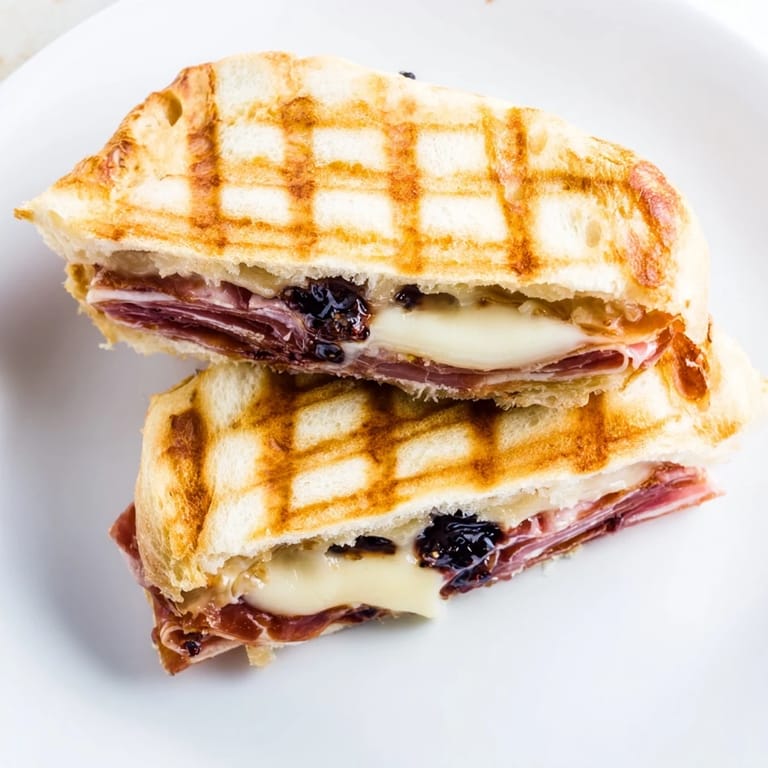 Save
Save This is one of those recipes I come back to when I need something simple that still feels special. It doesn't ask much of you, but it gives back more than you'd expect.
Recipe FAQs
- → What type of bread works best for this panini?
Rustic Italian breads like ciabatta or sourdough are ideal. They have a sturdy crust that becomes crispy when pressed while maintaining a tender interior. The texture complements the creamy cheese and delicate prosciutto perfectly.
- → Can I substitute the fontina cheese?
Yes, fontina can be replaced with mozzarella for a milder flavor or taleggio for creaminess. Brie and goat cheese also work well for tangier profiles. Choose cheeses that melt smoothly for the best results.
- → What equipment do I need to cook this panini?
A panini press is ideal for even cooking and consistent cheese melting. However, a large skillet works equally well—just apply gentle pressure with a spatula while cooking to achieve that signature crispy exterior.
- → How can I enhance the flavor?
Fresh arugula adds a peppery note, while a sprinkle of freshly cracked black pepper enhances the savory elements. You can also experiment with different fig jam varieties or add a touch of balsamic vinegar for depth.
- → What pairs well with this panini?
Crisp Italian white wines like Pinot Grigio or Vermentino complement the sweetness and salt beautifully. Light reds such as Barbera also work well. Pair with a simple green salad or roasted vegetables for a complete meal.
- → How long does it take to prepare?
Total time is just 18 minutes: 10 minutes for preparation including spreading ingredients and buttering, plus 8 minutes for cooking (about 4 minutes per side). This makes it perfect for quick gourmet meals.