 Save
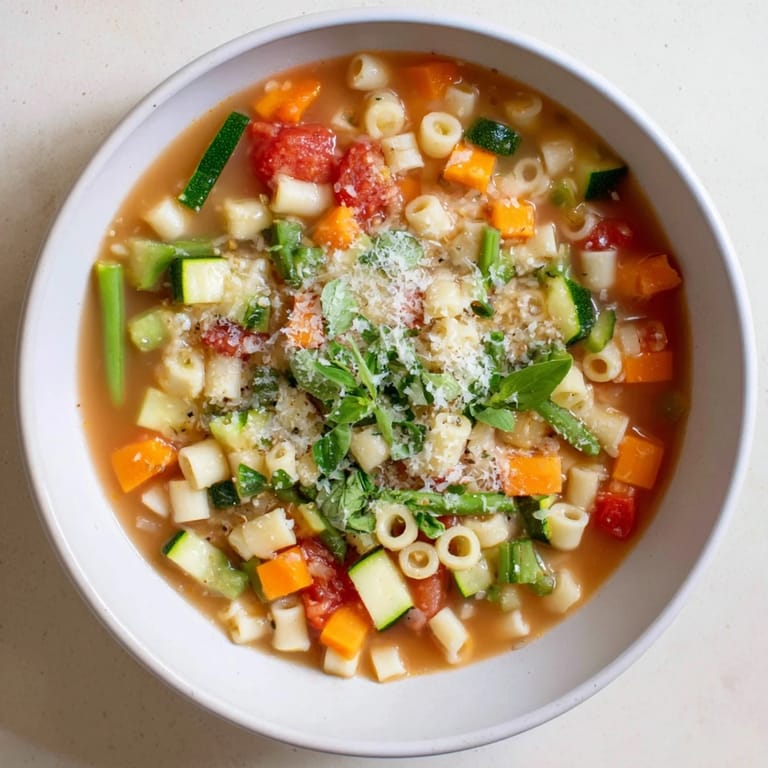
Save There is something deeply comforting about the sound of vegetables sizzling in olive oil, the way the kitchen fills with the aroma of garlic and onions transforming in the pan. I started making minestrone during those unpredictable shoulder seasons when you cannot quite commit to winter stew but crave something more substantial than a salad. This soup became my go-to for clearing out the vegetable drawer, a practice that turned what could have been food waste into something my family now requests by name.
Last winter my neighbor dropped by unexpectedly while I had a pot simmering on the stove. She stayed for hours, bowl after bowl, and we talked about everything and nothing while the snow fell outside. That is the kind of soup this is, the one that pulls people to the table and keeps them there.
Ingredients
- Olive oil: Use a decent quality extra virgin here, it forms the flavor foundation of your soup
- Onion and garlic: Take your time with these, they should be translucent and fragrant, not browned
- Carrots and celery: These create the classic mirepoix base that gives depth to the broth
- Zucchini and potato: The potato thickens the soup naturally while zucchini adds fresh texture
- Green beans: Cut them uniformly so they cook evenly and maintain a pleasant bite
- Canned diced tomatoes: Do not drain them, the juices are essential for building that rich, red tinged broth
- Vegetable broth and water: This combination keeps the soup from becoming overly salty or intense
- Cannellini beans: These creamy white beans hold their shape beautifully and add protein
- Small pasta: Ditalini or elbows are perfect because they catch in your spoon with every bite
- Dried oregano and basil: These dried herbs bloom during the long simmer, infusing depth throughout
- Bay leaf: One leaf adds that subtle background note that says homemade soup
- Fresh parsley and basil: Add these at the very end to brighten everything up
Tired of Takeout? 🥡
Get 10 meals you can make faster than delivery arrives. Seriously.
One email. No spam. Unsubscribe anytime.
Instructions
- Build your aromatic base:
- Pour the olive oil into your large soup pot and set it over medium heat. Toss in the chopped onion and minced garlic, letting them soften and become fragrant for about 2 to 3 minutes.
- Soften the harder vegetables:
- Add the carrots, celery, zucchini, potato, and green beans to the pot. Stir everything together and let it sauté for 5 to 6 minutes until the vegetables start to yield slightly to the touch of your wooden spoon.
- Create the simmering broth:
- Pour in the diced tomatoes with all their juices, followed by the vegetable broth and water. Sprinkle in the dried oregano, dried basil, bay leaf, and season with salt and pepper. Bring everything to a gentle boil.
- Let the flavors meld:
- Lower the heat until the soup is at a steady simmer, cover the pot, and let it cook for 15 minutes. The vegetables will continue to soften and the broth will begin to take on all those lovely flavors.
- Add the hearty elements:
- Stir in the drained cannellini beans and the pasta. Keep the soup simmering, this time uncovered, for another 10 to 12 minutes until the pasta is tender and the vegetables are cooked through.
- Finish with fresh herbs:
- Fish out and discard the bay leaf, then stir in the chopped fresh parsley and basil. Give it a taste and add more salt or pepper if needed.
- Serve it up:
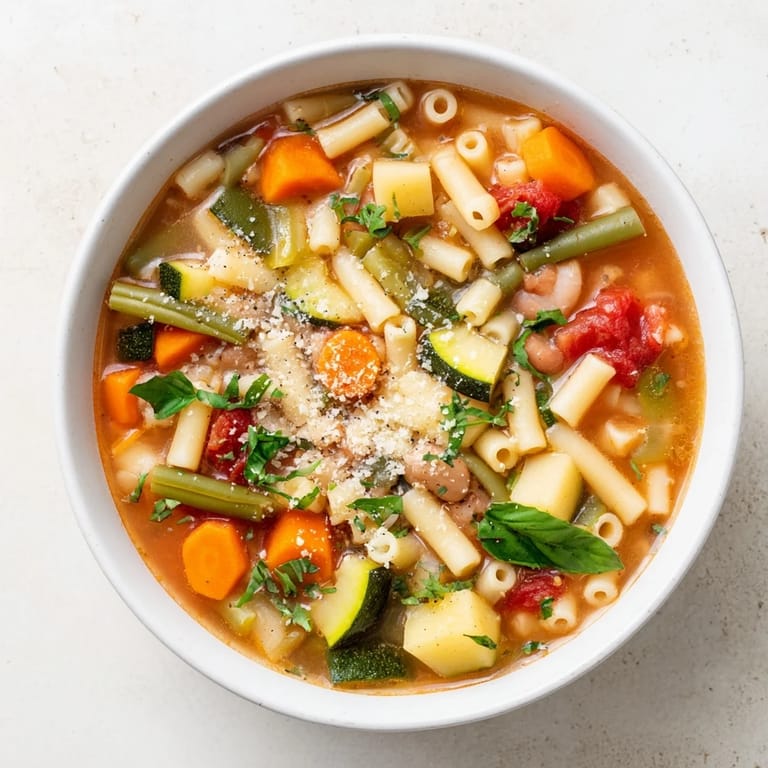
- Ladle the hot soup into bowls and offer grated Parmesan at the table for anyone who wants to sprinkle some on top.
 Save
Save 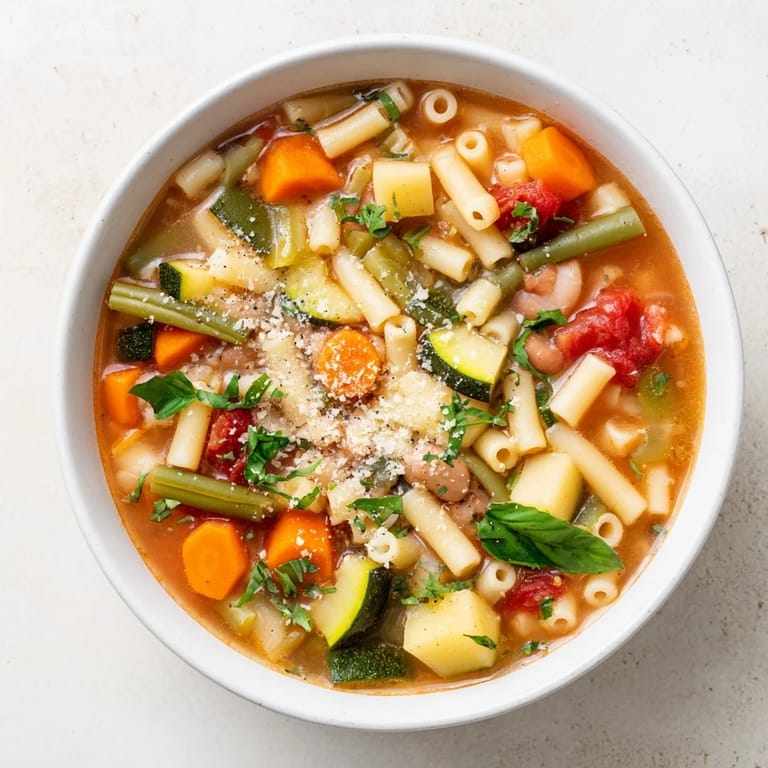 Save
Save This is the soup I make when someone needs bringing back to center, when the day has been too long or too loud. There is honest medicine in vegetables simmered slowly, in a bowl of something warm that asks nothing of you but to sit and eat.
Making It Your Own
I have learned that minestrone forgives almost any substitution, which is why it has become such a reliable friend in my kitchen. In spring I might add fresh peas and asparagus, while winter calls for hearty kale and butternut squash. The only constants are the beans and the pasta, everything else is up for negotiation.
The Bread Question
There are two schools of thought on bread with soup. Some people prefer a slice toasted and rubbed with garlic, others like to tear chunks directly into the bowl to soak up the broth. I am firmly in the tearing camp, watching the bread soften and swell until it becomes part of the soup itself.
Timing Is Everything
This soup improves with a short rest, so try to make it at least an hour before you plan to eat. The flavors settle and marry in those quiet minutes off the heat, developing a roundness that rushed soups simply never achieve.
- Grate extra Parmesan in advance and store it in the fridge for easy serving
- Set out a small bowl of red pepper flakes for those who like a little heat
- Keep some extra broth handy in case the soup thickens more than you like when reheating
 Save
Save 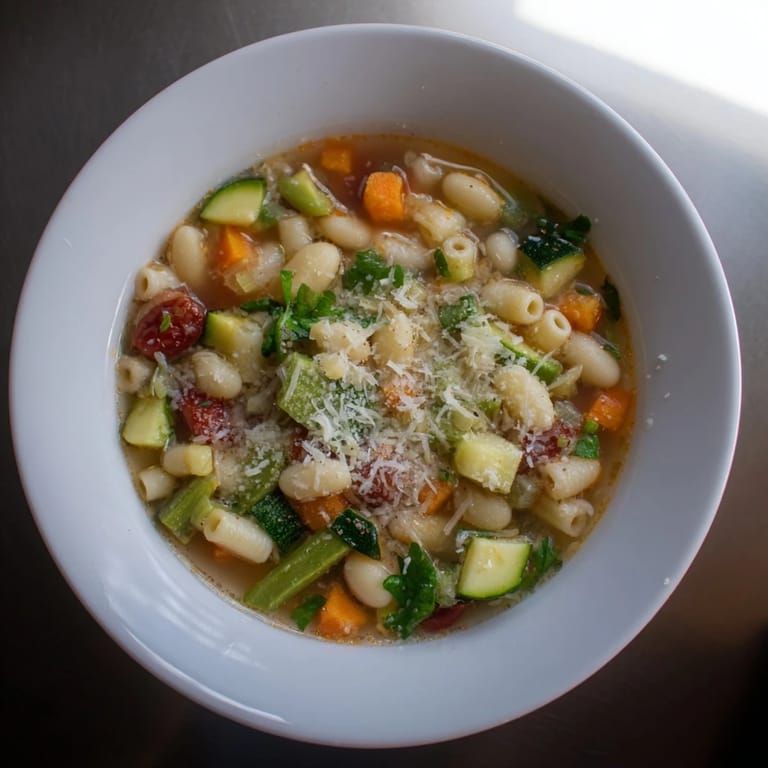 Save
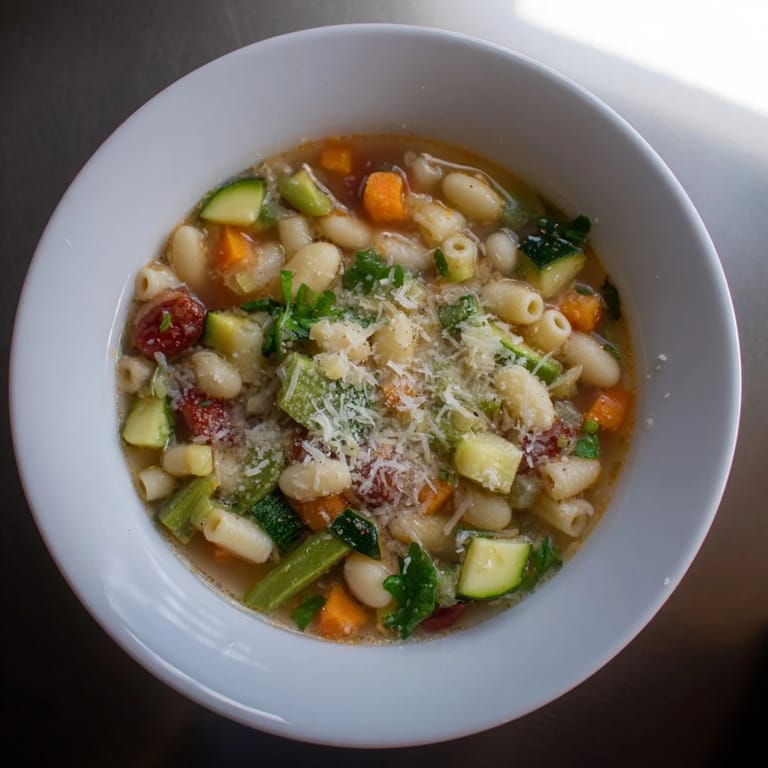
Save There is always room for another bowl of something made with care, especially when the recipe is flexible enough to welcome whatever the season brings.
Recipe FAQs
- → What vegetables work best in minestrone?
Traditional minestrone includes carrots, celery, zucchini, potatoes, and green beans, but it's incredibly versatile. Spinach, kale, cabbage, or seasonal vegetables all work beautifully. The key is cutting everything into similar-sized pieces for even cooking.
- → Can I make this gluten-free?
Absolutely. Simply substitute regular pasta with gluten-free varieties like rice pasta, corn pasta, or chickpea pasta. Alternatively, add extra beans or rice instead. Always check your vegetable broth and seasonings to ensure they're certified gluten-free.
- → How do I store and reheat leftovers?
Store cooled soup in airtight containers in the refrigerator for up to 4 days, or freeze for 3 months. Note that pasta absorbs liquid over time, so add extra broth when reheating. Gently warm on the stovetop over medium heat, stirring occasionally.
- → What type of pasta should I use?
Small shapes that hold up well in liquid work best—ditalini, elbow macaroni, small shells, or tubetti. Avoid delicate shapes that might break apart. If planning to freeze, consider cooking pasta separately and adding when reheating to prevent mushiness.
- → Is minestrone better the next day?
Definitely. The flavors deepen and meld beautifully overnight. Make a batch on Sunday and enjoy throughout the week. The vegetables continue to soften and the broth becomes more richly flavored as it sits, making it an excellent meal prep option.
- → Can I add protein beyond beans?
Yes. While cannellini beans provide substantial protein, you can add pancetta or diced bacon during the sauté step for richness. Browned ground turkey or Italian sausage also work well. For a plant-based protein boost, consider adding lentils or extra white beans.