 Save
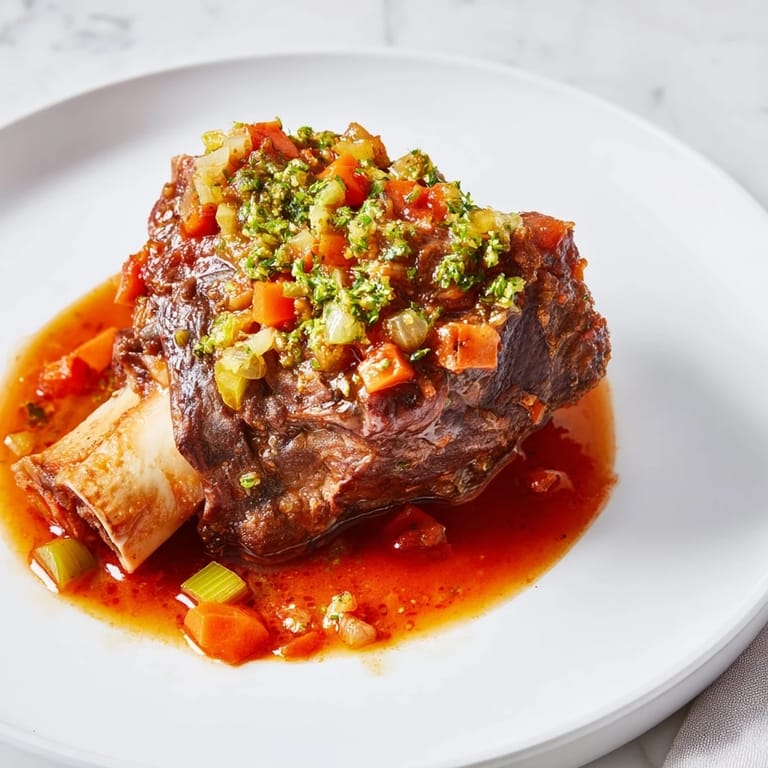
Save There's something about the aroma of veal gently braising in wine and tomatoes that makes a kitchen feel like home, even if you've never been there before. I first made osso buco on a cold autumn evening when a visiting friend mentioned she'd never tried this Milanese classic, and I found myself digging through my pantry with the kind of determined energy that only good cooking brings. The result was so revelatory—those tender shanks, the silky sauce, the bright spark of gremolata at the end—that it became one of those dishes I return to whenever I want to feel both accomplished and generous at the table.
I remember my uncle insisting that osso buco was too fussy, too fancy for a weeknight, until I made it for his birthday and he went completely quiet halfway through the first bite. The way he looked at that plate—like he'd just discovered something he'd been missing—reminded me that the best meals aren't about impressing people, they're about showing up with genuine care and time.
Ingredients
- Veal shanks: Cross-cut and bone-in is crucial because the marrow and collagen create that glossy, unctuous sauce you're after; if your butcher hasn't cut them for you, ask nicely and they almost always will.
- Flour for dredging: A light coating is all you need to get a gentle golden crust that helps seal in the juices without making the dish heavy.
- Olive oil and butter: This combination gives you the flavor depth of butter with the heat tolerance of oil, the real workhorse of the pan.
- Aromatic vegetables: Onion, carrot, and celery form the holy trinity that becomes the sweet, soft foundation of your braising liquid.
- Dry white wine: Not the cooking wine from the bottom shelf; use something you'd actually drink, because you're tasting it in every spoonful.
- Tomatoes and tomato paste: The paste adds concentrated flavor and body, while the canned tomatoes provide acidity and texture that balances the rich meat.
- Stock: Beef or veal stock deepens the savory notes and gives the braise its backbone.
- Bay leaves and thyme: These gentle herbs don't overpower; they whisper underneath, adding warmth without competing with the veal.
- Lemon zest: Save half for the gremolata, where it becomes bright and essential, cutting through richness like a fresh breeze.
- Gremolata: This triumphant little mixture of parsley, garlic, and lemon is what transforms a good dish into a memorable one.
Tired of Takeout? 🥡
Get 10 meals you can make faster than delivery arrives. Seriously.
One email. No spam. Unsubscribe anytime.
Instructions
- Prepare and season the veal:
- Pat the shanks dry with paper towels so they'll brown properly instead of steam, then season generously with salt and pepper—be more generous than feels right, because the flour and braising will mellow it. A light dredge in flour creates that subtle golden crust that catches the heat.
- Build your golden foundation:
- Heat the oil and butter over medium-high heat until they're foaming and fragrant, then brown the shanks on all sides until they're deeply golden; this should take about 3-4 minutes per side, and you'll know it's working when the pot smells almost caramelized. Don't rush this step, because this is where the deep flavor begins.
- Soften the aromatics:
- In the same pot, add your chopped onion, carrots, celery, and garlic, stirring occasionally until they're soft and translucent, about 6 minutes. The vegetables release their sweetness into the fat left from browning the meat, creating a flavor base that's already delicious.
- Deepen with tomato and wine:
- Stir in the tomato paste and let it cook for about a minute until it darkens slightly, then pour in the white wine while scraping up every browned bit stuck to the bottom of the pot—that's flavor you earned. The wine will sizzle and reduce slightly, concentrating its character.
- Build the braising liquid:
- Add the diced tomatoes with their juice, stock, bay leaves, thyme, and half the lemon zest, stirring everything together so the flavors begin to mingle. The liquid should smell like a warm, savory embrace.
- Return the veal and begin the braise:
- Nestle the browned shanks back into the pot in a single layer and spoon some of the sauce over each one so they begin absorbing the flavors immediately. Bring everything to a gentle simmer on the stovetop first, then cover and transfer to a preheated 160°C/325°F oven for 2 hours.
- Make the gremolata while waiting:
- Finely chop fresh flat-leaf parsley and mince a garlic clove, then combine with the reserved lemon zest and set aside. This bright mixture will be your secret weapon for bringing everything into focus at the end.
- Finish with richness and brightness:
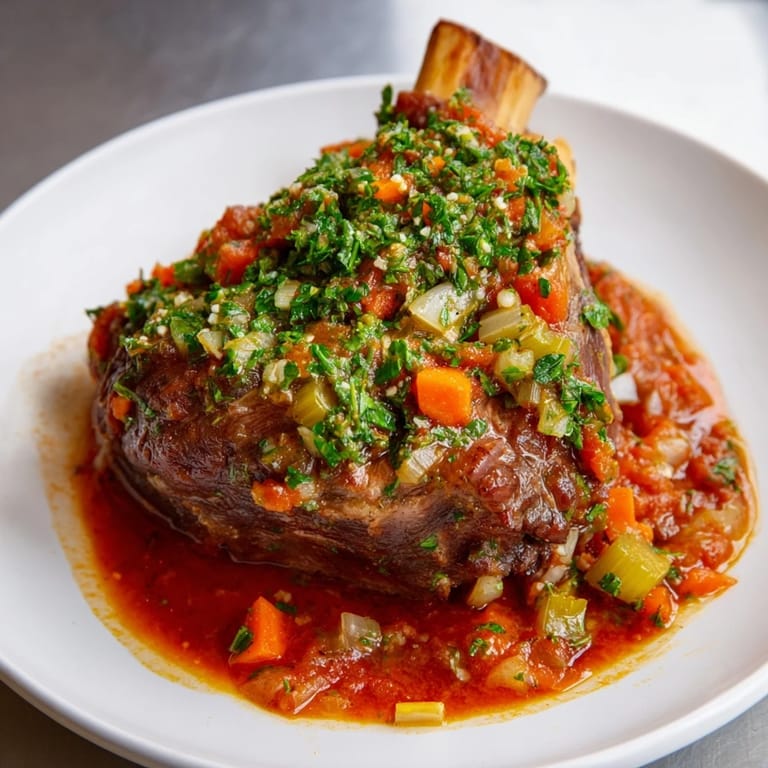
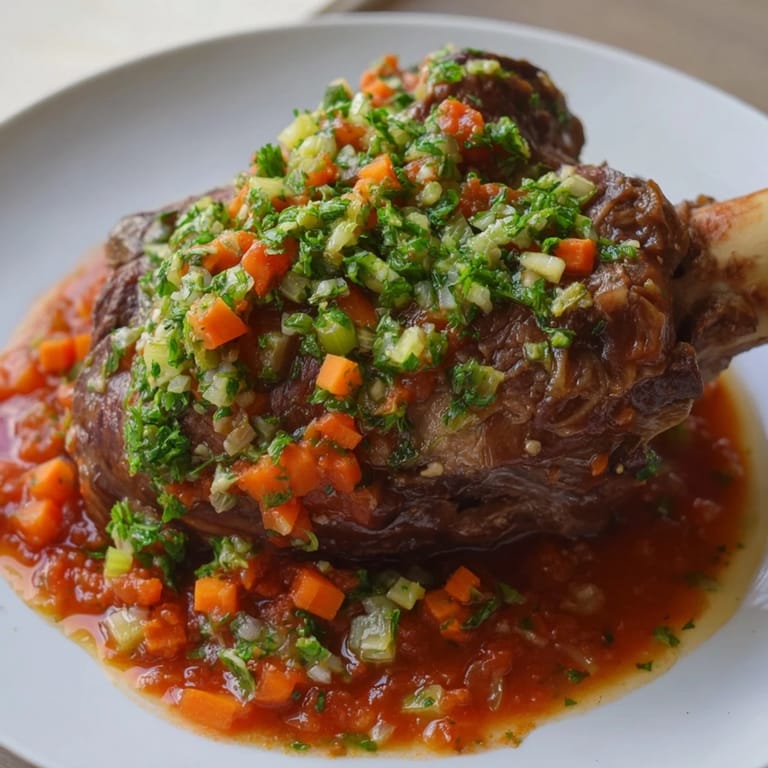
- After 2 hours, the veal should be so tender it nearly falls from the bone; remove the shanks to a serving platter and skim any excess fat from the sauce if you like, then simmer the sauce on the stovetop for a few minutes if you want it thicker. Spoon the glossy sauce over the shanks and finish with a generous pinch of gremolata that will make everything taste suddenly alive.
 Save
Save The first time someone asked for seconds of osso buco, unprompted and with that look of genuine surprise, I understood why this dish has been beloved for centuries. It's not flashy or complicated, but it tastes like someone took the time to do something right, and that matters more than any shortcut ever will.
The Magic of Time and Heat
Osso buco teaches you something essential about cooking: low and slow isn't a compromise, it's a strategy. Those 2 hours in the oven aren't wasted time; they're when the veal's connective tissue becomes gelatin, when flavors marry and deepen, when something tough becomes silky. You could theoretically rush this on the stovetop, but you'd lose the gentle, even cooking that makes the difference between meat that's soft and meat that's actually transformed.
What to Serve Alongside
Osso buco deserves a companion that can honor its richness without competing, and there are several traditions worth knowing. Saffron risotto (Risotto alla Milanese) is the classic choice—the creamy, luxurious rice absorbs the sauce like a dream, and the saffron's warmth echoes the tomato and wine beautifully. Creamy mashed potatoes work too, offering comfort and a neutral canvas for the sauce, while polenta brings a subtle sweetness and silky texture that balances the braised meat perfectly.
Variations and Thoughtful Swaps
Once you understand how this dish works, you can adapt it to what you have and love. Beef shanks are a reliable substitute if veal isn't available, though you'll want to add 15-20 minutes to the cooking time since beef is denser and benefits from extra tenderness. For a gluten-free version, simply swap regular flour for gluten-free flour when dredging the shanks; the rest of the recipe remains unchanged.
- Some cooks add a splash of balsamic vinegar in the final minutes for extra complexity and depth.
- If your sauce seems thin after braising, simmer it uncovered on the stovetop for 10 minutes to reduce and concentrate the flavors.
- Gremolata can be made ahead and stored in an airtight container in the fridge for up to a day, though fresh is always better.
 Save
Save This is the kind of dish that rewards you for showing up with time and intention, and every time you make it, you'll notice something new—a depth you hadn't tasted before, a slight variation that makes it more yours. That's when you know it's a recipe worth keeping.
Recipe FAQs
- → What cut of meat is best for Osso Buco?
Veal shanks, cross-cut with bone-in, are traditionally used to achieve tender meat and rich marrow flavors.
- → How long should the veal be braised?
Braising for about 2 hours at low heat ensures the meat becomes fork-tender and absorbs the sauce flavors deeply.
- → Can Osso Buco be made gluten-free?
Yes, using gluten-free flour for dredging the shanks maintains texture without gluten contamination.
- → What is gremolata and why is it added?
Gremolata is a fresh mix of lemon zest, parsley, and garlic that brightens the dish, balancing the rich braise with freshness.
- → Which side dishes complement Osso Buco best?
Traditional pairings include saffron risotto, creamy polenta, or mashed potatoes to soak up the flavorful sauce.
- → Can beef shanks be substituted for veal?
Yes, beef shanks can be used but may require longer cooking time to achieve similar tenderness.