 Save
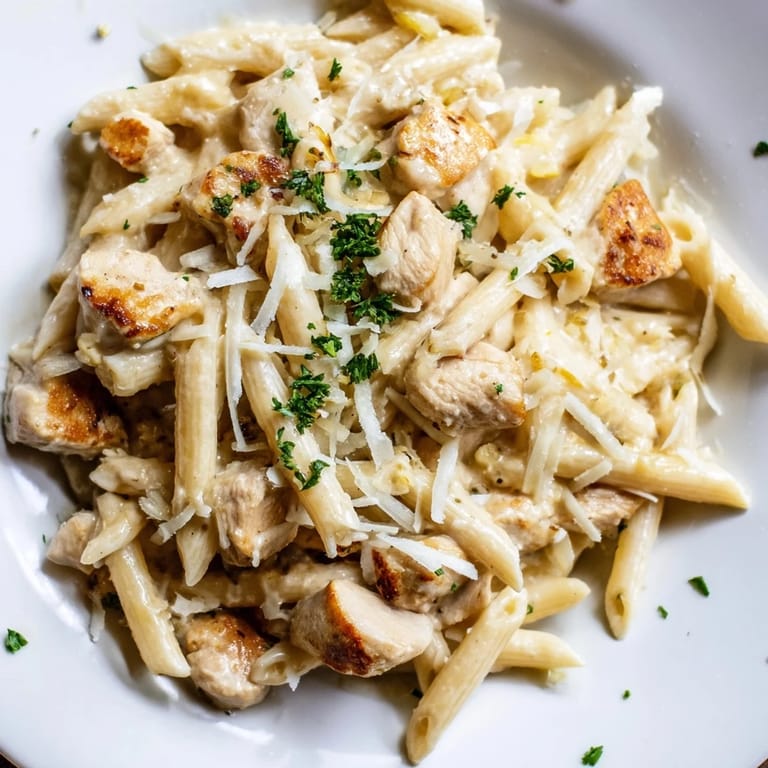
Save There's something about the smell of garlic hitting hot butter that makes you feel like you're cooking something special, even on a Wednesday night when you've got thirty minutes and zero energy left. That's when this pasta came into my life—a friend texted saying she'd made dinner in basically the time it took to boil water, and I was skeptical until I tried it. One bite and I understood: tender chicken, silky sauce, pasta that actually tastes like it belongs there instead of just sitting in cream. It became my go-to when I wanted to prove to myself that good food didn't require hours or a long ingredient list.
I made this for my sister after she'd had one of those days where nothing goes right, and watching her light up at the first bite reminded me that sometimes the best meals aren't the complicated ones—they're the ones made with actual care, even if they're quick. She's made it probably fifteen times since then, always with that same surprised expression that something this easy could taste this good.
Ingredients
- Chicken breasts: Two large ones cut into bite-sized pieces give you actual texture in every forkful; I learned the hard way that uniform sizing matters because it all finishes at the same time.
- Penne or rotini: The shapes catch the sauce, which is the whole point—don't reach for spaghetti thinking it's the same thing.
- Parmesan cheese: Freshly grated makes a difference you can taste immediately; pre-grated has anti-caking agents that muddy the whole thing.
- Heavy cream: This is what makes the sauce happen, no real substitute that gives the same silky finish.
- Butter: Unsalted lets you control the salt level and brings out flavors that oil alone can't touch.
- Garlic and onion: The aromatic base that makes people ask what smells so good before they even sit down to eat.
- Fresh parsley: Not fancy, but it wakes everything up at the end and stops the dish from feeling heavy.
- Chicken broth: Low-sodium because you're adding salty Parmesan anyway; the broth becomes your sauce liquid, so its flavor matters.
- Italian seasoning: The seasoning that ties everything together without needing five different dried herbs.
- Red pepper flakes: Optional but honestly, a light hand of heat balances the richness beautifully.
- Olive oil: Just one tablespoon for the initial sauté; you've got butter coming in too.
Tired of Takeout? 🥡
Get 10 meals you can make faster than delivery arrives. Seriously.
One email. No spam. Unsubscribe anytime.
Instructions
- Start with fat and heat:
- Medium-high heat in your skillet with oil and butter creates that sizzle when the chicken hits the pan. You want to hear it immediately.
- Cook the chicken until it's golden:
- Four to five minutes, stirring occasionally so it browns on multiple sides but stays tender inside. Season as it cooks so the flavor goes in, not on top.
- Build your flavor base:
- Remove the chicken, then soften the onion in the same pan for two minutes—it picks up all those brown bits. Add garlic after the onion so it doesn't burn; one minute is enough to make the whole kitchen smell incredible.
- Add the broth and pasta together:
- This is the trick that makes it one-pan magic: you're not cooking pasta in salted water separately, you're building the sauce as the pasta cooks. Bring it to a boil, then medium heat, stirring every couple of minutes so nothing sticks to the bottom.
- Watch it come together:
- Ten to twelve minutes and the pasta goes from hard to tender while absorbing most of the broth. This is when you know it's working because the liquid thickens and the kitchen smells like dinner.
- Make it creamy:
- Low heat, add cream and Parmesan, stir until the cheese melts completely and you've got a sauce that coats the back of a spoon. Don't rush this; let it happen slowly so it stays smooth.
- Bring it home:
- Chicken goes back in for a minute or two to warm through. Parsley goes in last so it stays bright green and tastes fresh, not cooked into the sauce.
 Save
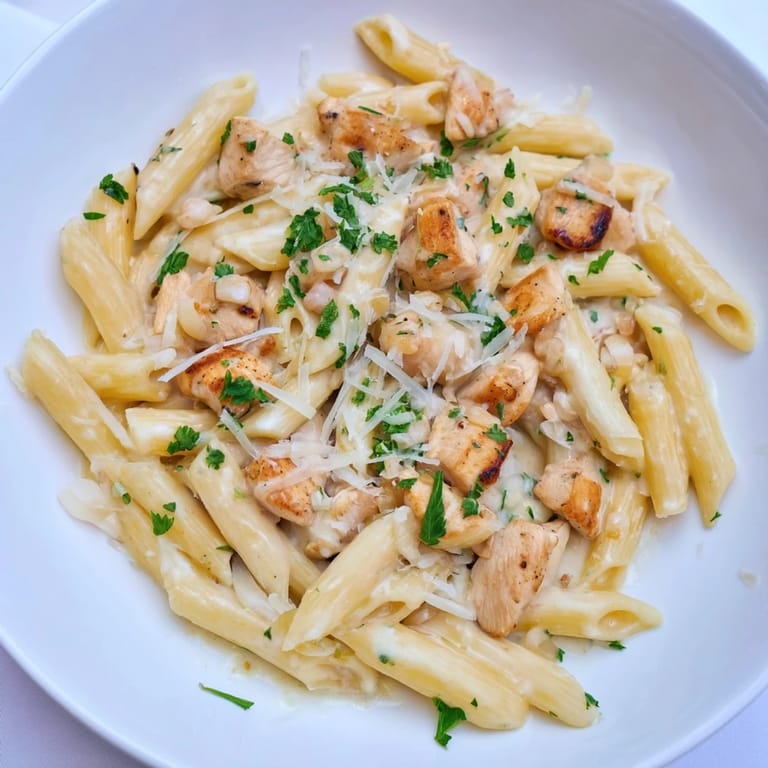
Save The first time someone asked for the recipe, I wrote it down on a sticky note in the kitchen, and that sticky note lived on their fridge for months. It turned into a regular thing they'd make on their own busy nights, and it became our shorthand for 'I'm tired but I still want to eat something good.' That's when I knew it wasn't just my dish anymore.
The Magic of One-Pan Cooking
There's a reason this works so well in one pan: every layer of flavor stays in the equation. The chicken browns and leaves its essence behind. The onions and garlic cook in those browned bits. The pasta absorbs all of that plus the broth, so it's not neutral—it's already delicious before the cream even joins. It's the opposite of cooking where components are separate and then combined; everything tastes like it was meant to be together from the start.
Variations That Actually Work
I've added fresh spinach with the onions and it disappears into the sauce like it was always supposed to be there. Mushrooms do the same thing if you slice them thin and give them a minute to soften before the garlic goes in. Someone once added sun-dried tomatoes and red pepper flakes at the same time, and the sharpness cut through the cream in a way that felt intentional, not like they were trying to fix something broken. The core stays the same; you're just layering in what sounds good to you that night.
When to Serve It
This is the meal that saved my Monday through Thursday nights for months. It's fast enough that you're not standing around at seven PM wondering if dinner will ever happen, but it tastes like you planned it. Pair it with a simple green salad if you want something fresh alongside it, or just call it done and eat it straight from the pan if you're honest about that kind of night. A crisp white wine never hurts, but honestly, cold water tastes perfect too because the dish is balanced enough that it doesn't need anything to apologize for.
- Make it on Sunday and you've got solid leftovers that reheat beautifully in a low oven with a splash of broth.
- Double the recipe easily; it scales perfectly and freezes well if you separate it into portions.
- Grate extra Parmesan and chop extra parsley right before you eat so they're fresh and sharp, not sitting in the warmth of the pan.
 Save
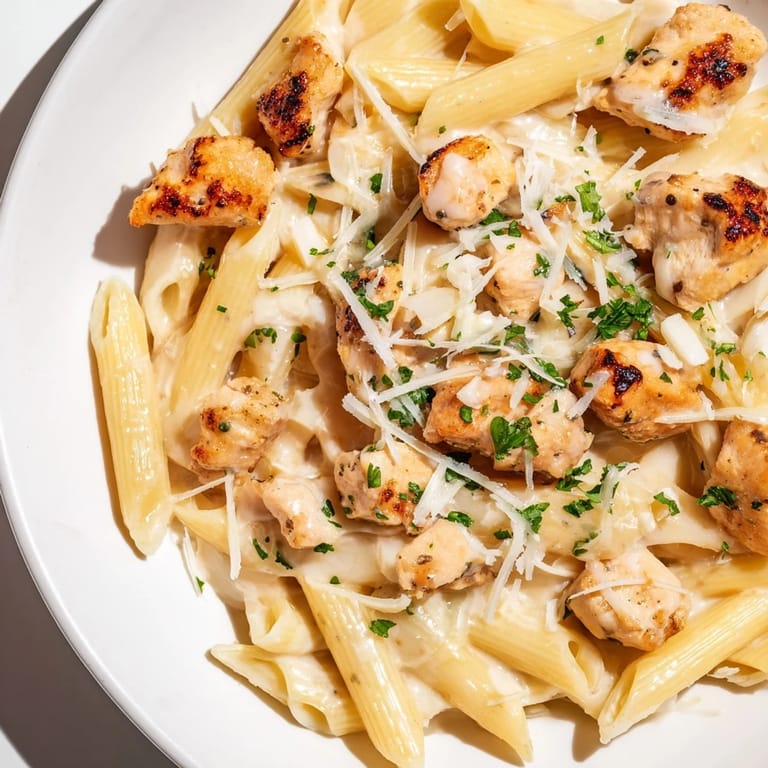
Save This dish proved to me that you don't need complicated techniques or rare ingredients to make food that actually matters. Some of the best meals are the ones that fit into real life and still taste like you cared.
Recipe FAQs
- → Can I use different pasta shapes?
Yes, penne or rotini work best, but feel free to use other short pasta shapes that hold sauce well.
- → How can I make this dish gluten-free?
Use gluten-free pasta and ensure your broth and seasonings do not contain gluten.
- → Can I add vegetables to this dish?
Absolutely, baby spinach or sliced mushrooms added during the sautéing step complement the flavors nicely.
- → What is the best way to achieve a creamy sauce?
Stir heavy cream and freshly grated Parmesan into the cooked pasta and broth mixture over low heat until melted and smooth.
- → How do I prevent chicken from drying out?
Sauté chicken pieces quickly over medium-high heat until golden but still juicy, then combine with the sauce promptly.