 Save
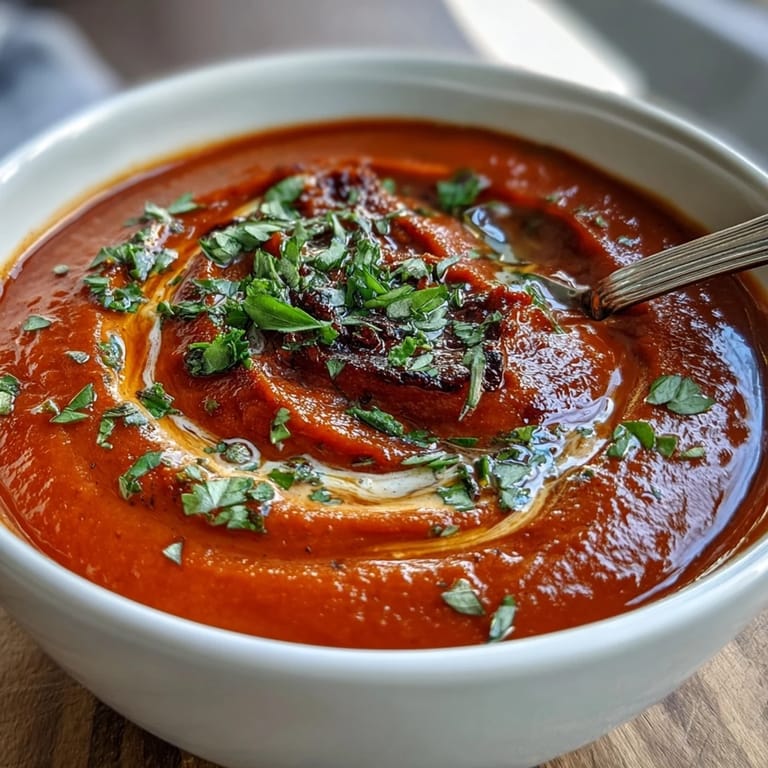
Save There's something almost magical about the moment you pull a baking sheet of charred red peppers from the oven—the kitchen fills with this sweet, smoky perfume that makes everyone pause and ask what you're making. I discovered this soup on a grey afternoon when I had four beautiful peppers sitting on my counter and absolutely no idea what to do with them, so I roasted them on instinct. What came out was this silky, jewel-toned soup that tasted like summer had been concentrated into a bowl, with just enough harissa to keep things interesting without overwhelming the delicate sweetness of the peppers.
I made this for my sister last winter when she was going through a rough patch, and I'll never forget how she sat at my kitchen island, wrapped in a sweater, slowly working through a bowl while we talked about nothing in particular. By the second spoonful, something shifted in her expression—not dramatically, but enough that I knew the combination of warmth and that gentle spice was doing what food does best, which is remind you that someone cares enough to spend time in the kitchen for you.
Ingredients
- Red bell peppers (4 large): These are the soul of the soup, and roasting them transforms their natural sugars into deep, complex sweetness; don't skip the charring step even if it seems dramatic.
- Garlic (4 cloves, unpeeled): Roasting unpeeled garlic makes it mellow and almost buttery, a trick that prevents the harsh bite raw garlic would bring.
- Yellow onion (1 large, chopped): The aromatic base that builds flavor alongside the carrot and celery, adding subtle sweetness and body to the final soup.
- Carrot and celery (1 medium carrot, 1 stalk): These classic aromatics add depth and a faint earthiness that balances the peppers' brightness.
- Vegetable broth (3 cups): Use a quality broth you actually enjoy drinking, because it becomes the liquid foundation of every spoonful; I've learned the hard way that skimping here affects everything.
- Olive oil (2 tbsp total): Split between roasting and sautéing, good olive oil carries the flavor without overpowering the delicate peppers.
- Harissa paste (1–2 tsp): This North African chili paste adds warmth and a whisper of smoke rather than aggressive heat; start with 1 teaspoon and taste before adding more.
- Smoked paprika and cumin (1 tsp and 1/2 tsp): These spices echo the roasting flavors and add an almost imperceptible smokiness that makes people wonder what secret ingredient you used.
- Salt, pepper, and optional garnishes: Finish with a careful hand on seasoning, and the crème fraîche or yogurt swirl becomes both decoration and a cooling contrast to any spice.
Tired of Takeout? 🥡
Get 10 meals you can make faster than delivery arrives. Seriously.
One email. No spam. Unsubscribe anytime.
Instructions
- Fire up the oven and char those peppers:
- Preheat to 425°F and arrange your whole red peppers and unpeeled garlic cloves on a baking sheet, then drizzle with a tablespoon of olive oil and slide it into the oven. Roast for 25–30 minutes, turning the peppers halfway through, until their skin is blackened in patches and they've collapsed slightly—this is where all the magic happens, so don't rush it.
- Steam and peel while the oven cools:
- Transfer the hot peppers to a bowl, cover it with a plate or plastic wrap, and let them sit for 10 minutes; this steam loosens the skin and makes peeling almost meditative. Squeeze the soft roasted garlic from its papery skin and set both aside.
- Build your aromatic base:
- Heat the remaining olive oil in a large pot over medium heat and add your chopped onion, carrot, and celery, stirring occasionally until they're soft and just beginning to turn golden, about 5–7 minutes. This slow cooking develops a subtle sweetness that becomes the foundation under everything else.
- Toast the spices and add roasted ingredients:
- Add the roasted peppers, roasted garlic, smoked paprika, cumin, and harissa paste to the pot and stir constantly for about a minute until the kitchen smells like a spice market. This brief cooking bloom releases the oils in those spices and deepens their flavor.
- Simmer everything together:
- Pour in your vegetable broth, bring the whole thing to a boil, then drop the heat to a gentle simmer and let it bubble away for 10 minutes. This resting period allows all the flavors to get acquainted.
- Blend until it's silk:
- Use an immersion blender to puree the soup directly in the pot (my preferred method because it's less mess) or carefully transfer it in batches to a countertop blender until you've got a completely smooth, velvety texture. Taste and adjust your salt, pepper, and harissa until it tastes like your version of perfect.
- Finish and serve:
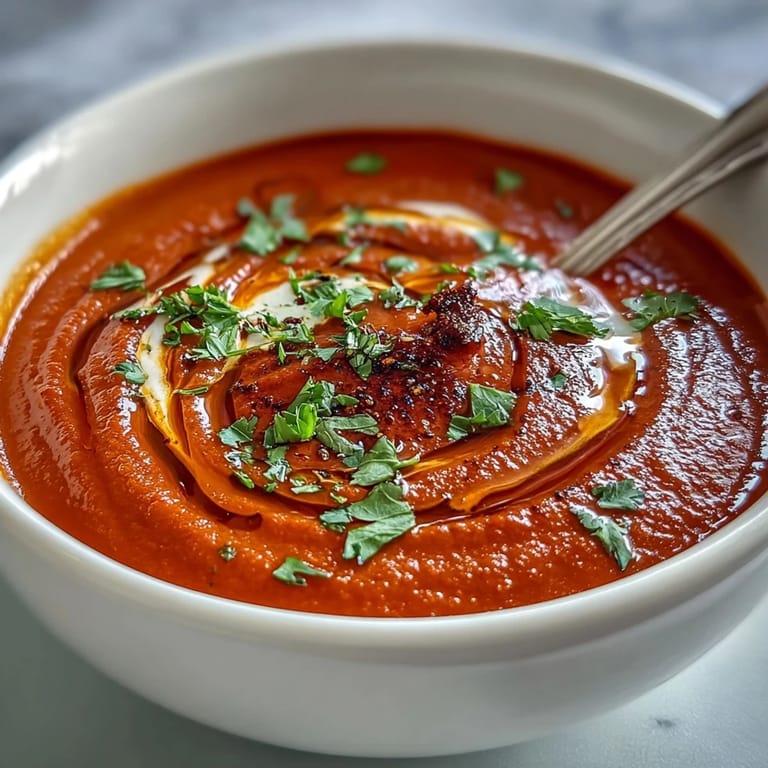
- Ladle the hot soup into bowls and top each one with a small spoonful of crème fraîche or yogurt, a scatter of fresh parsley or cilantro, and crusty bread on the side if you want something to soak up the last spoonfuls.
 Save
Save What strikes me most about this soup is how it proves that roasting is a form of transformation—those raw peppers that seemed so ordinary become something entirely new through heat and time. There's something deeply satisfying about that alchemy, and it's a lesson I keep returning to whenever I'm uncertain about what to cook.
The Power of Roasting
Roasting concentrates flavors in a way that no other cooking method quite matches; the dry heat caramelizes the natural sugars in the peppers and garlic, creating depth and complexity that can't be rushed. I've tried shortcuts like using jarred roasted peppers, and while they're absolutely acceptable in a pinch, they lack that slightly charred edge and the aroma that fills your kitchen and signals to everyone that something special is happening. The extra 30 minutes of roasting time is genuinely where this soup earns its silky texture and sophisticated flavor.
Balancing Heat and Sweetness
The harissa paste is where personality enters the picture, and it's worth understanding what you're adding before you stir it in; it's not meant to make the soup hot so much as to add a warm complexity and a whisper of smoke. I've learned to keep a small spoon dedicated to tasting as I cook, which means I can adjust the heat to match the people I'm cooking for or simply to match my mood that day. Some days I want it mellow and sweet, other days I'm feeling the full two teaspoons, and both versions are entirely correct.
Storing and Serving Ideas
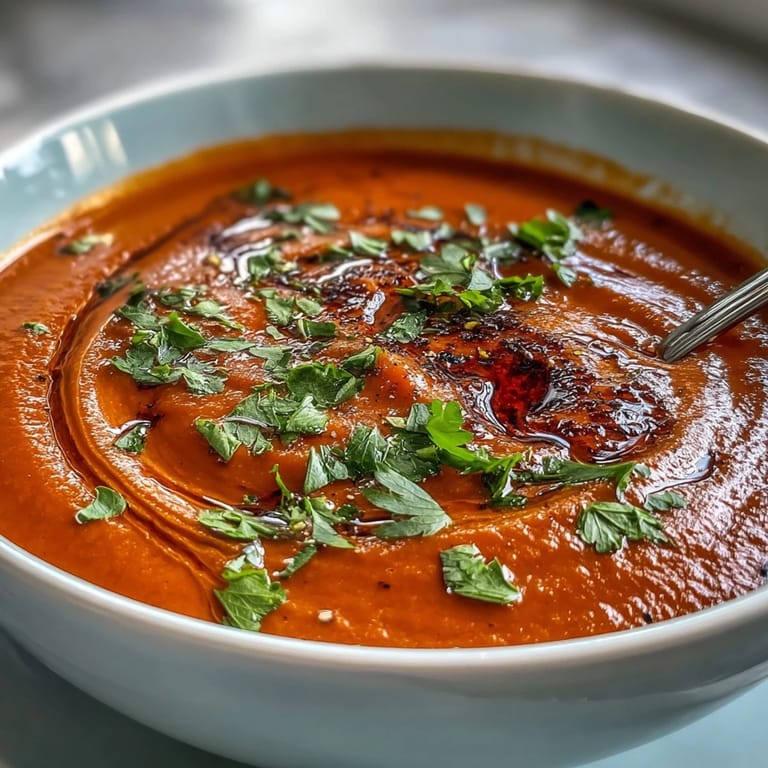
This soup is one of those dishes that actually improves slightly after a day in the refrigerator, as the flavors settle and deepen, making it ideal for batch cooking or meal prep. It freezes beautifully for up to three months, though I'd recommend freezing it without the garnishes and adding the crème fraîche swirl and fresh herbs after reheating. Serve it on its own as a light dinner, or pair it with crusty bread and a green salad for something more substantial, and don't hesitate to experiment with your garnishes—a drizzle of really good olive oil, a few toasted pine nuts, or even a crumble of feta cheese can become your signature version.
- Leftovers will keep in the refrigerator for up to three days in an airtight container.
- For a vegan version, simply swap the crème fraîche for coconut milk or a plant-based yogurt alternative.
- This soup is naturally gluten-free as long as you use certified gluten-free broth and serve it with gluten-free bread if desired.
 Save
Save There's comfort in knowing that four peppers, some time in the oven, and a little patience can become something worth sharing. Make this soup when you want to feel like a good cook without actually fussing too much.
Recipe FAQs
- → Can I use jarred roasted peppers instead of fresh?
Absolutely. Jarred roasted peppers work well and reduce prep time significantly. Drain them thoroughly before adding to the pot, though you may miss some of the fresh charred flavor from oven-roasting.
- → How spicy is the harissa in this soup?
The harissa provides gentle background warmth rather than intense heat. Starting with 1 teaspoon yields mild spice that most palates enjoy. Increase to 2 teaspoons or add extra harissa after blending if you prefer more kick.
- → What can I substitute for harissa paste?
Try a blend of smoked paprika, cayenne pepper, and a touch of tomato paste. Alternatively, mild chili paste or Calabrian chili paste works. Adjust quantities based on your preferred spice level.
- → How long does this soup keep in the refrigerator?
This soup stores beautifully for 3-4 days in an airtight container. The flavors actually develop and deepen overnight. Reheat gently over low heat, stirring occasionally, and add a splash of broth if it thickens too much.
- → Can I freeze this for later?
Yes, freeze in portion-sized containers for up to 3 months. Leave out the dairy garnish when freezing, then add fresh crème fraîche or yogurt after reheating. Thaw overnight in the refrigerator before warming through.
- → What's the best way to achieve the silkiest texture?
An immersion blender makes this effortless directly in the pot. For ultra-smooth results, pass the blended soup through a fine-mesh sieve. The roasting step is crucial—those charred skins and caramelized garlic create incredible depth and body.