 Save
Save There's something about the sizzle of seafood hitting hot oil that stops me mid-conversation every time. The first paella I made was completely unplanned—a friend called asking if I could cook dinner for six, and somehow saffron, shrimp, and a borrowed paella pan seemed like the only answer. What I didn't know then was that this one dish would become the meal I reach for whenever I want to feel like I'm cooking something grand but approachable, something that looks spectacular but doesn't demand perfection.
I remember my neighbor leaning against my kitchen counter, watching the paella come together with complete skepticism until that moment when I poured the golden broth over the rice and the whole kitchen filled with this amber-colored steam. She grabbed my arm and said, 'This is actually happening, isn't it?' That's when I understood—paella isn't just dinner, it's watching something transform in front of you.
Ingredients
- Saffron threads: Don't skip this or buy the ground version—it loses its soul in a jar and tastes musty. The threads bloom in warm broth and give you that unmistakable golden color and delicate flavor that makes people wonder what you did differently.
- Short-grain paella rice (Bomba or Arborio): This rice has a starchy exterior that holds the shape while staying creamy inside, which is exactly what you want—nothing mushy, nothing crunchy.
- Fish or seafood stock: Use real stock if you can, not bouillon cubes. The difference is subtle but real, especially when it's the main liquid carrying all your flavors.
- Shrimp, mussels, and clams: Buy them the day you're cooking and keep them cold. Check that the shells are closed (or close when tapped) and smell like ocean, not ammonia.
- Smoked paprika: This is your secret—it adds depth without overpowering, a gentle earthiness that balances the brightness of saffron.
- Bell peppers, onion, and garlic: These are your aromatic foundation; take your time with them in the oil so they become sweet and mellow before the rice joins them.
- Olive oil: Use good oil here because you taste it directly, not buried in a sauce. Spanish oil pairs beautifully with Spanish rice.
- Fresh parsley: Add it at the very end, right before serving—it stays bright and adds a fresh note that cuts through the richness.
Tired of Takeout? 🥡
Get 10 meals you can make faster than delivery arrives. Seriously.
One email. No spam. Unsubscribe anytime.
Instructions
- Bloom the saffron:
- Pour your stock into a saucepan and add the saffron threads, letting them steep over low heat. This step takes just a few minutes, but the threads will release their color and flavor into the liquid, turning it golden and fragrant. You want the stock hot but not boiling when you pour it in later.
- Build your flavor base:
- Heat olive oil in your paella pan over medium heat and soften the onion first—this takes about two minutes and mellows out the sharp bite. Add garlic next, just for a few seconds until you smell it, then add the bell peppers. Cook them for three to four minutes so they lose their raw edge but keep their shape and color.
- Add the tomato:
- Stir in your grated tomato and let it cook down—you want to see most of the liquid evaporate so the tomato concentrates and caramelizes slightly. This takes a couple of minutes and deepens the whole flavor profile.
- Toast the rice:
- Add the rice to the pan and stir constantly for about two minutes, coating every grain with oil and the vegetables. The rice will look glossy and should smell slightly nutty when it's ready. This toasting step keeps the rice from turning into porridge later.
- Season and add the stock:
- Sprinkle in the smoked paprika, salt, and pepper, then pour in the warm saffron-infused stock in an even stream. Resist the urge to stir after this point—this is where the paella develops its character.
- Cook without stirring:
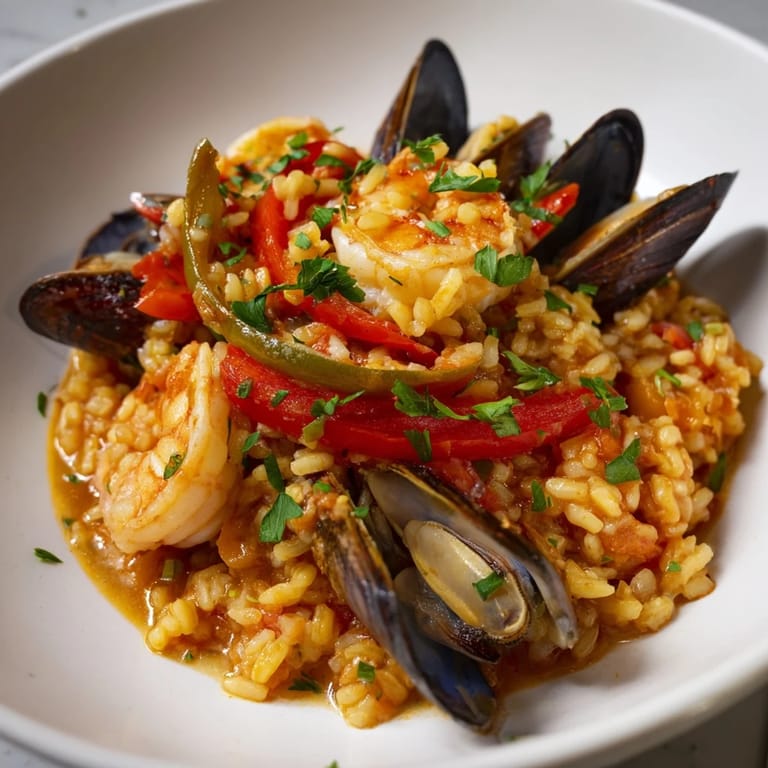
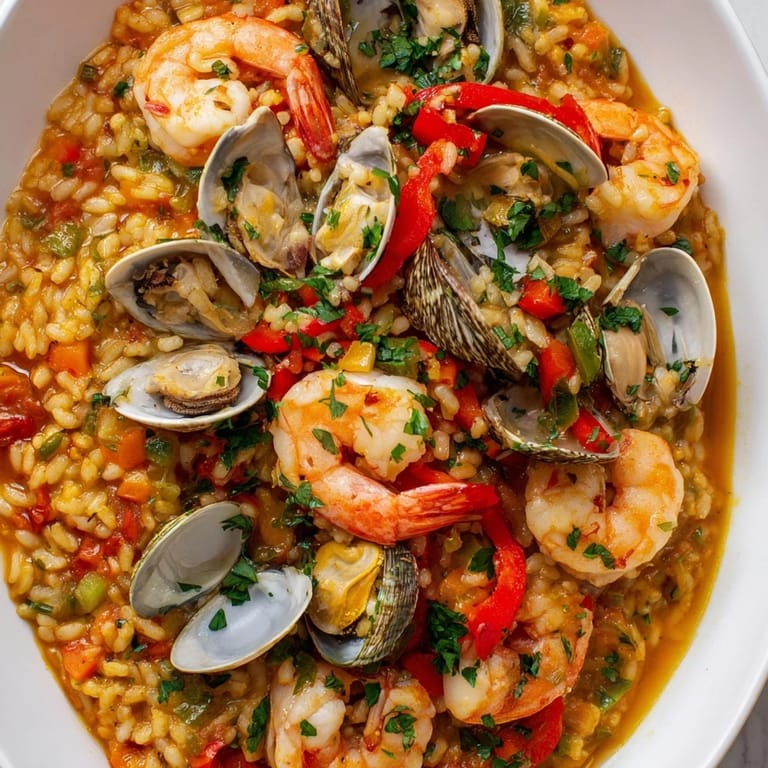
- Arrange your shrimp, mussels, and clams over the rice (they'll cook gently in the steam), then cover loosely with foil or a lid. Cook over medium-low heat for twenty to twenty-five minutes, until the rice is tender and the shellfish have opened. You should hear a gentle sizzle from the bottom—that's the prized socarrat forming, a crispy, golden layer that paella lovers fight over.
- Rest and serve:
- Remove the pan from heat and let it sit covered for five minutes. This gives everything a chance to finish cooking and settling. Garnish with fresh parsley and squeeze lemon wedges over each plate—the acidity brightens everything.
 Save
Save My sister tried this paella at a dinner I made and called it 'a love letter to Spain you actually put on a plate.' I'd never thought about it that way, but she was right—it's not fancy or complicated, but it carries so much history and intention in every bite.
The Story of Saffron
Saffron is expensive because each strand is hand-harvested from a crocus flower, and you need thousands of flowers to make a single pound. But here's what matters: those threads are the backbone of authentic paella, and they're worth it for the color and flavor they bring. When you bloom them in warm broth, they release this subtle, almost honeyed note that pairs perfectly with the sea flavors. The first time I used saffron, I was nervous about the cost, but halfway through cooking, when my kitchen smelled like something I'd only experienced in restaurants, I understood why Spanish cooks consider it sacred.
When to Add Variations
Paella is flexible without losing its identity. Some cooks add peas (frozen works fine) in step five for sweetness and color. Others stir in calamari or chunks of firm white fish alongside the shellfish. I've made it with both approaches, and both feel right depending on what I have on hand and what mood I'm in. The rule is: don't add too much protein, or the rice gets crowded and doesn't cook evenly. Keep the spotlight on the rice and let the seafood dance around it.
Wine and Timing
A crisp Spanish white wine like Albariño or Verdejo pairs beautifully with paella, cutting through the richness of the oil and brightening the saffron notes. The timing feels natural too—while your stock warms and your ingredients come together, you're opening a bottle and settling into the rhythm of cooking. By the time the paella hits the table, everyone's already in a good mood, which somehow makes the food taste better.
- Spanish wine regions and paella regions share the same DNA—they understand each other on the plate.
- Pour wine for your guests while the paella rests those final five minutes—it builds anticipation.
- If you're cooking for someone who doesn't drink wine, a crisp sparkling water with lemon works beautifully too.
 Save
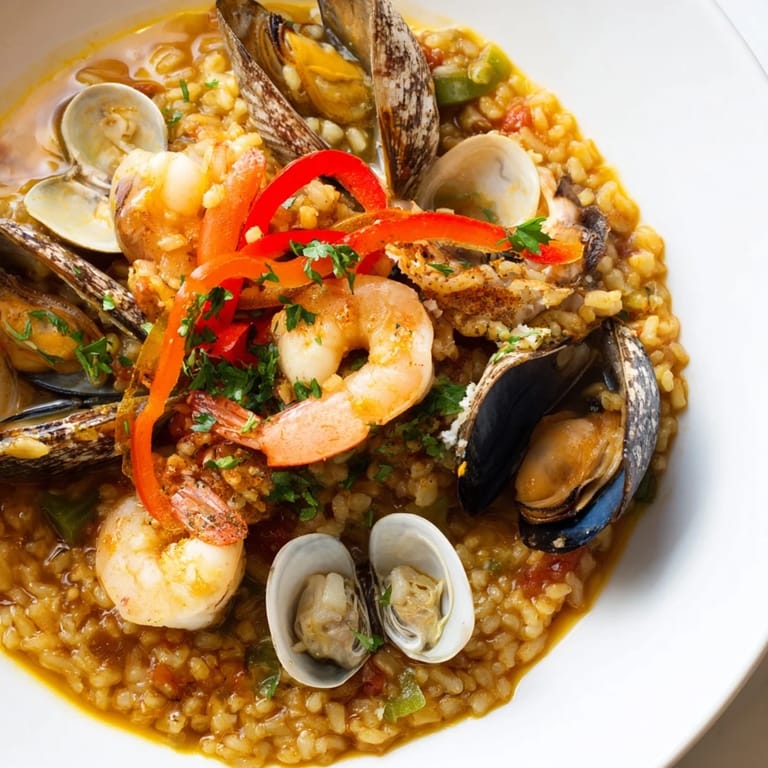
Save Paella has a way of turning an ordinary night into something you remember. Make this when you want people at your table to feel celebrated, or when you want to remind yourself that you can make something beautiful.
Recipe FAQs
- → What type of rice is best for this dish?
Short-grain rice varieties like Bomba or Arborio are ideal as they absorb the broth well without becoming mushy.
- → Can I substitute the seafood ingredients?
Yes, calamari or firm white fish can replace some seafood, but ensure all shellfish are fresh and properly cleaned.
- → How do you infuse the saffron flavor effectively?
Warm the seafood stock and steep the saffron threads in it to release their vibrant color and aroma before adding to the rice.
- → What cooking vessels work best for this dish?
A large paella pan or a wide skillet provides the ideal surface area for even cooking and traditional texture formation.
- → How can the dish be garnished for enhanced flavor?
Chopped fresh parsley adds brightness and lemon wedges provide a tangy contrast when squeezed over before serving.