 Save
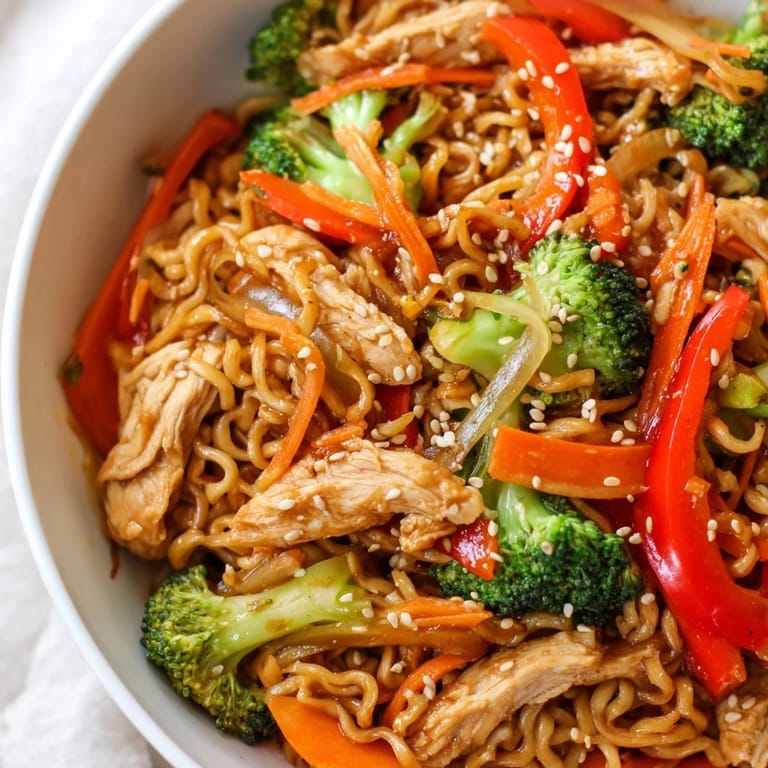
Save The wok was already smoking when I realized I'd forgotten to prep the sauce, and that scramble taught me more about stir-fry timing than any cookbook ever could. This spicy ramen stir-fry was born from a Tuesday night when takeout felt too slow and my pantry offered just enough to make something wild. The smell of ginger hitting hot oil still makes my stomach growl before I've even started cooking. I've made this dish at least two dozen times now, tweaking the heat level depending on who's at the table. It's become my go-to when I need dinner fast but refuse to compromise on flavor.
I made this for my friend who swore she didn't like spicy food, and she finished her entire bowl before asking if there was more. The trick was adding just enough sriracha to wake up her taste buds without overwhelming them. We sat on my tiny balcony with our bowls, the evening cool enough to enjoy the heat from the dish. She admitted halfway through that maybe she'd been wrong about spice all along. That night turned this from just another weeknight dinner into something I'd proudly serve to guests.
Ingredients
- Boneless, skinless chicken breasts: Slicing them thin ensures they cook fast and soak up the sauce, and freezing them for fifteen minutes beforehand makes slicing a breeze.
- Instant ramen noodles: Toss those seasoning packets, the noodles themselves are perfect vehicles for the sauce, and they cook in minutes.
- Red bell pepper: It adds a sweet crunch that balances the heat, and its color makes the dish look as vibrant as it tastes.
- Broccoli florets: They stay crisp if you don't overcook them, giving texture contrast against the soft noodles.
- Carrot: Julienned carrots cook quickly and add a subtle sweetness that rounds out the spice.
- Green onions: Their mild sharpness brightens the whole dish, and they're best added at the end to keep that fresh bite.
- Garlic and ginger: This duo is non-negotiable, their fragrance is what makes your kitchen smell like a proper stir-fry spot.
- Soy sauce: The salty backbone of the sauce, it deepens every other flavor without overpowering them.
- Sriracha or chili garlic sauce: This is where the heat lives, and you control exactly how much fire you want.
- Oyster sauce: It brings a savory umami richness that makes the sauce cling and glisten.
- Sesame oil: Just a tablespoon adds that toasted, nutty aroma that makes everything taste more complex.
- Brown sugar: A touch of sweetness tames the heat and balances the saltiness perfectly.
- Toasted sesame seeds: They add a delicate crunch and a visual finish that makes the dish feel complete.
Tired of Takeout? 🥡
Get 10 meals you can make faster than delivery arrives. Seriously.
One email. No spam. Unsubscribe anytime.
Instructions
- Boil the Noodles:
- Cook the ramen noodles according to package directions, usually about three minutes in boiling water. Drain them well and set aside, they'll finish cooking in the wok later.
- Mix the Sauce:
- Whisk together soy sauce, sriracha, oyster sauce, sesame oil, brown sugar, and water in a small bowl until the sugar dissolves. Having this ready before you start cooking saves you from a frantic mid-stir-fry scramble.
- Cook the Chicken:
- Heat a tablespoon of vegetable oil in a large wok or skillet over medium-high heat until it shimmers. Add the sliced chicken in a single layer and stir-fry for four to five minutes until just cooked through, then remove and set aside.
- Bloom the Aromatics:
- In the same pan, toss in the minced garlic and grated ginger, stirring constantly for thirty seconds. You'll know they're ready when the smell hits you and makes your mouth water.
- Stir-Fry the Vegetables:
- Add the bell pepper, broccoli, and carrot to the pan and stir-fry for three to four minutes. They should be tender but still have a crisp bite, not limp or mushy.
- Bring It All Together:
- Return the cooked chicken to the pan, add the drained noodles, and pour the sauce over everything. Toss vigorously for two to three minutes until the sauce coats every strand and the noodles are heated through.
- Finish and Adjust:
- Stir in the sliced green onions and taste the dish. Add more sriracha if you want extra heat or a splash of soy sauce if it needs more salt.
- Serve:
- Divide into bowls and garnish with toasted sesame seeds and fresh cilantro or more green onions. Serve immediately while it's still steaming hot.
 Save
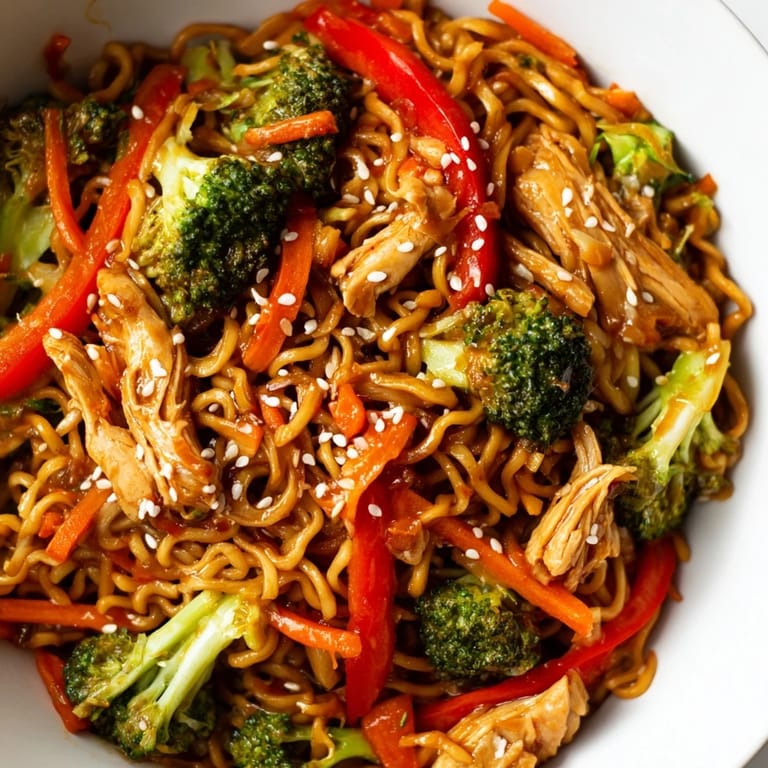
Save One night I made a double batch and my neighbor knocked on the door asking what smelled so good. I handed him a bowl through the doorway and he stood there eating it on my front step, too hungry to wait. He admitted later that he'd been living on frozen pizza for weeks and had forgotten what real cooking smelled like. That moment reminded me that food doesn't just fill you up, it pulls people back into their kitchens and connects them to something alive. This dish has a way of doing that, cutting through the everyday fog with heat, color, and a little bit of kitchen chaos.
Adjusting the Heat
The beauty of this stir-fry is how forgiving it is when it comes to spice. Start with one tablespoon of sriracha and taste the sauce before committing, you can always add more but you can't take it back. If you accidentally go overboard, a squeeze of lime juice or an extra teaspoon of brown sugar will mellow the burn without losing the flavor. I've served this to spice lovers and spice skeptics alike, and everyone leaves happy because the dish bends to your preference. Keep a bottle of sriracha on the table and let people customize their own heat level if you're cooking for a crowd.
Swapping the Protein
Chicken works beautifully here, but this recipe is flexible enough to handle whatever protein you have on hand. I've swapped in firm tofu, shrimp, thinly sliced beef, and even leftover rotisserie chicken with great results. Tofu needs to be pressed and cubed, then crisped up in the wok before setting it aside, and shrimp cooks even faster than chicken so watch it closely. The key is to cook your protein separately first, then bring it back at the end so nothing gets rubbery or overcooked. This adaptability has saved me countless trips to the grocery store when I'm cooking on a whim.
Storage and Reheating
Leftovers keep well in an airtight container in the fridge for up to three days, and I've honestly grown to love this dish cold straight from the container as a quick lunch. If you prefer it hot, reheat it in a skillet over medium heat with a splash of water to loosen the noodles and refresh the sauce. The microwave works too, but the wok gives you back some of that fresh-cooked texture and keeps the vegetables from turning soggy. Don't expect it to stay crispy like it was fresh off the stove, but the flavors deepen overnight and the sauce clings even better the second time around.
- Add a drizzle of sesame oil when reheating to bring back that toasted aroma.
- If the noodles seem dry, a tablespoon of soy sauce or water will revive them.
- Garnish leftovers with fresh herbs and sesame seeds to make them feel brand new.
 Save
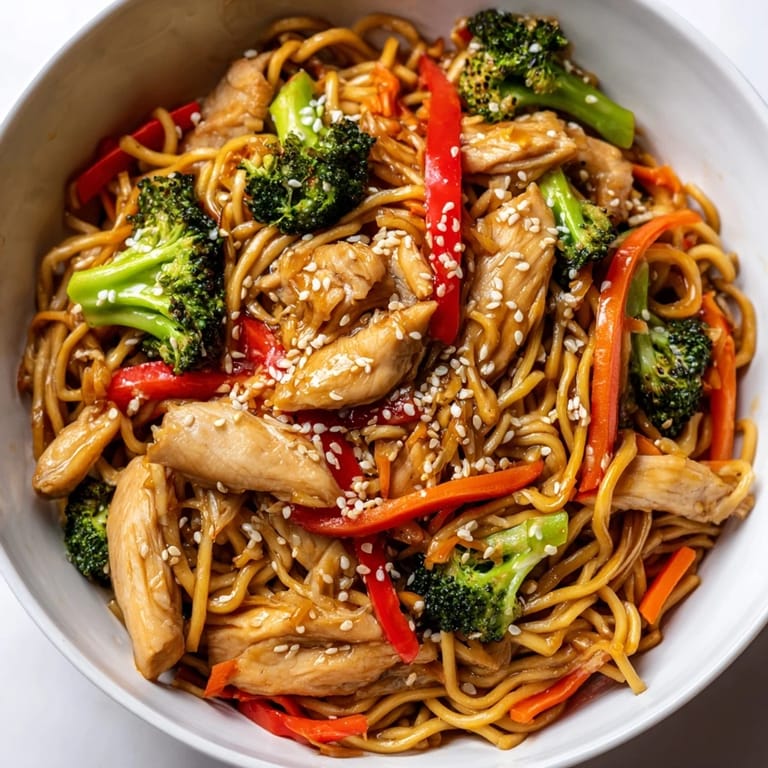
Save This dish has earned its place in my weekly rotation because it never feels like a compromise, even on the busiest nights. It's proof that fast food doesn't have to mean boring food, and that a little heat and a hot wok can turn humble ingredients into something you'll crave long after the bowl is empty.
Recipe FAQs
- → Can I adjust the heat level in this dish?
Absolutely. Start with the recommended amount of sriracha and add more to taste, or include red pepper flakes for additional heat. You can also reduce sriracha if you prefer milder flavors.
- → What proteins work best besides chicken?
Tofu is an excellent vegetarian substitute. You can also use shrimp, beef, or pork sliced thinly. Adjust cooking times based on your protein choice.
- → How do I keep vegetables crisp?
Don't overcook them during stir-frying. Aim for 3-4 minutes with high heat, stirring frequently. Vegetables should remain tender-crisp, not soft.
- → What vegetables can I substitute?
Try snap peas, mushrooms, baby corn, bok choy, or spinach. Adjust cooking times slightly depending on density. Hardy vegetables may need an extra minute or two.
- → Is this dish gluten-free?
Standard ramen noodles and soy sauce contain gluten. Use tamari or gluten-free soy sauce and certified gluten-free noodles to accommodate dietary restrictions.
- → Can I prepare components ahead of time?
Yes. Slice vegetables and chicken, prepare the sauce, and cook noodles a few hours ahead. Stir-fry everything together just before serving for best results and optimal texture.