 Save
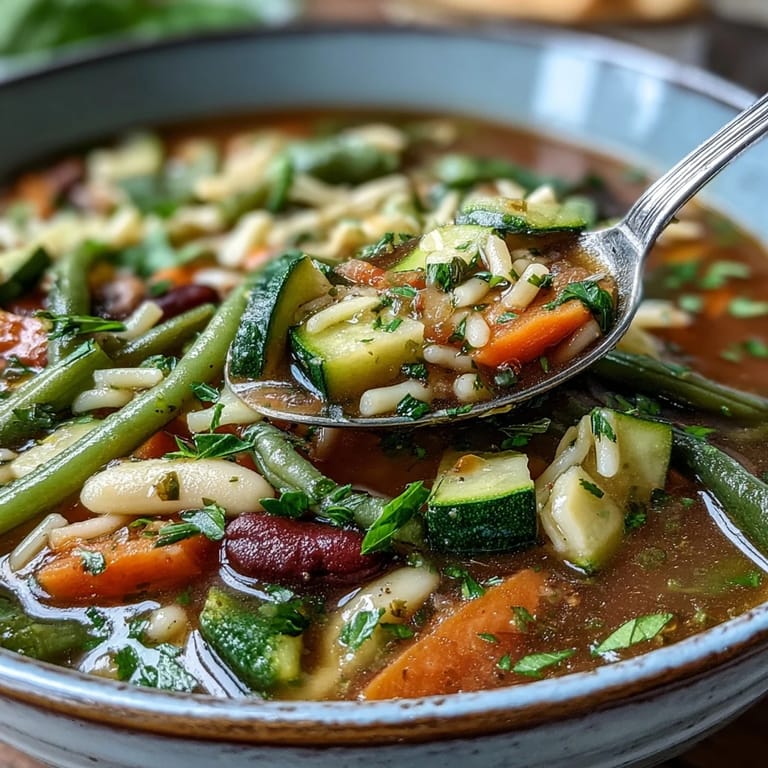
Save During a cold autumn evening in Tuscany, I discovered minestrone at a small farmhouse restaurant where steam rose from earthenware bowls brought to our table. The elderly chef insisted good minestrone needed patience and whatever vegetables were freshest that day. That bowl of comfort—vibrant with colors and textures—became my cooking mission when I returned home. I spent weeks tasting and adjusting until this recipe emerged, each spoonful carrying me back to that stone-walled kitchen.
Last winter when my neighbor broke her ankle, I brought over a pot of this minestrone and her entire family texted me for the recipe that evening. They described gathering around their table, dunking crusty bread into steaming bowls while snow fell outside their windows. Something about the humble combination of vegetables and beans in a fragrant broth seems to create instant community wherever it appears.
Ingredients
- Olive oil: Use a good quality extra virgin olive oil as its flavor forms the foundation of authentic Italian cooking.
- Seasonal vegetables: The beauty of minestrone lies in its adaptability—carrots, celery, zucchini, potatoes, and green beans create a colorful base that carries wonderful texture in each spoonful.
- Cannellini beans: These creamy white beans add protein and hearty substance, turning a simple vegetable soup into a complete meal.
- Small pasta: Tiny shapes like ditalini or elbow macaroni absorb the broth beautifully without overwhelming the vegetables.
- Italian herbs: The dried oregano, basil, and thyme create that unmistakable Italian aroma that fills your kitchen.
- Leafy greens: Adding spinach or kale at the end preserves their bright color and nutrients while giving the soup a fresh finish.
Tired of Takeout? 🥡
Get 10 meals you can make faster than delivery arrives. Seriously.
One email. No spam. Unsubscribe anytime.
Instructions
- Create the flavor base:
- Heat olive oil in a large pot and add the holy trinity of Italian cooking—onion, carrots, and celery. Youll know theyre ready when the kitchen fills with that sweet aroma and the vegetables begin to soften but still hold their shape.
- Build the vegetable layers:
- Add garlic, zucchini, potato, and green beans, giving them a few minutes to release their flavors into the oil. This quick sauté before adding liquid helps vegetables maintain their distinct character in the final soup.
- Bring everything to life:
- Pour in tomatoes, beans, broth, herbs, and that essential bay leaf, then bring it all to a gentle boil. The fragrance rising from the pot will transport you straight to an Italian countryside kitchen.
- Simmer patiently:
- Reduce the heat and let everything mingle for 20 minutes, covered. This is where magic happens as vegetables become tender and exchange flavors with one another.
- Add the pasta:
- Stir in your chosen small pasta and cook uncovered until al dente. Watch carefully here as the pasta will continue cooking in the hot broth even after the heat is turned off.
- Finish with freshness:
- Remove the bay leaf, then fold in your leafy greens just until they wilt. This final touch brings vibrant color and nutrients to your minestrone.
- Season and serve:
- Taste and adjust salt and pepper, then ladle into bowls with a sprinkle of parsley and Parmesan if desired. The cheese melts slightly into the hot soup, creating little pockets of savory richness.
 Save
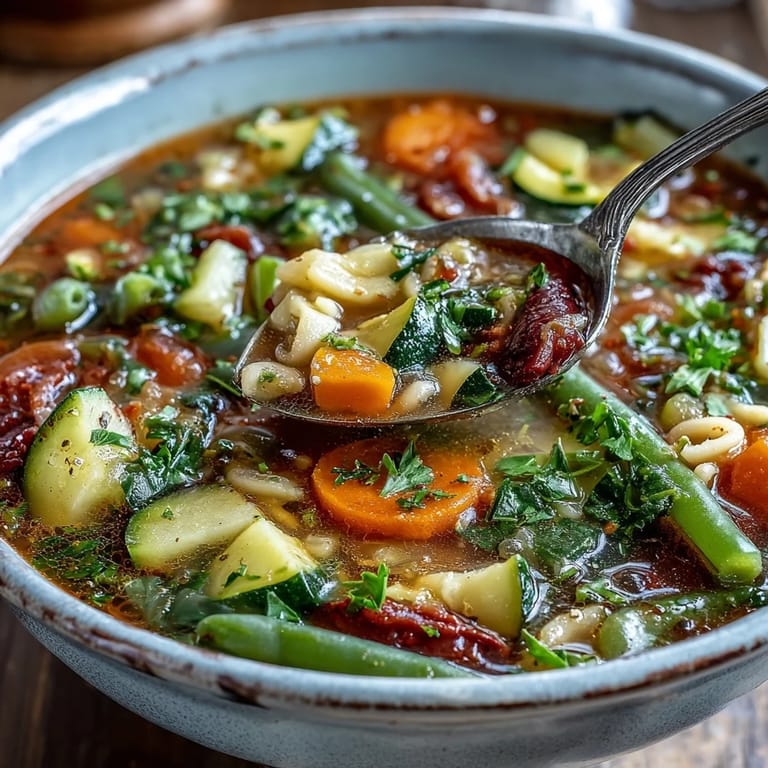
Save My brother-in-law who claims to hate vegetables once reluctantly tried my minestrone during a family gathering. I watched him from across the room as he took one spoonful, then another, eventually asking for seconds before the meal was over. When he later called asking specifically for my minestrone recipe for his sons birthday dinner, I knew this soup had powers beyond mere nourishment—it was changing vegetable skeptics into believers one bowl at a time.
Making It Your Own
What I love about making minestrone is how it reflects the seasons in my garden. During summer, I load it with zucchini, fresh tomatoes, and basil. Autumn brings butternut squash and kale variations, while winter versions might include more root vegetables and hearty cabbage. The soul of minestrone remains unchanged while its personality shifts with the calendar, making it a year-round companion in my kitchen.
Storage and Leftovers
Minestrone develops its character overnight in the refrigerator, where flavors deepen and meld into something even more wonderful than the original serving. Ive discovered that a splash of fresh olive oil and newly grated Parmesan when reheating transforms day-old soup into something that tastes deliberately aged rather than simply leftover. For freezing, I portion soup into glass containers before adding pasta, then cook fresh pasta when reheating to maintain perfect texture.
Serving Suggestions
The Italians taught me that minestrone isnt just about whats in the bowl—its also about whats alongside it. A simple green salad dressed with lemon and olive oil provides bright contrast to the soups depth. Crusty artisan bread with good butter or rubbed with garlic makes the perfect edible utensil for catching every last drop from your bowl.
- For a complete Italian experience, serve minestrone as a primo piatto before a simple main course of roasted chicken or fish.
- A small bowl of extra grated Parmesan on the table lets everyone customize their soup to their preference.
- When serving for lunch, pair with bruschetta topped with diced tomatoes and basil for a light but satisfying meal.
 Save
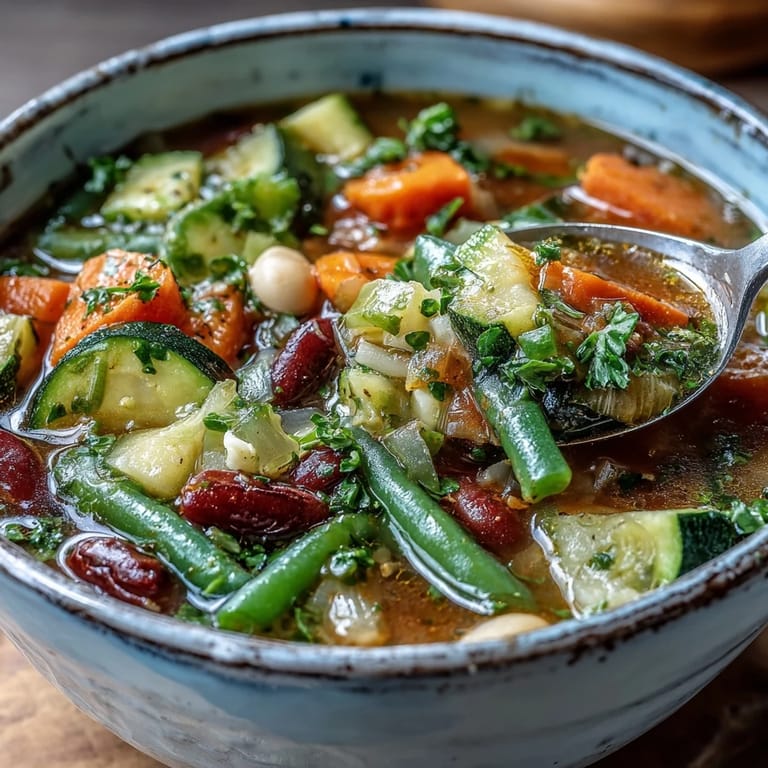
Save Minestrone reminds us that extraordinary meals often come from ordinary ingredients combined with care and patience. When you ladle this soup for someone, youre not just offering nourishment—youre sharing a piece of Italian wisdom that celebrates abundance in simplicity.
Recipe FAQs
- → What vegetables are traditionally in minestrone?
Traditional minestrone includes onions, carrots, celery, zucchini, potatoes, green beans, and tomatoes. This classic combination creates a hearty, nutritious base. Many variations also incorporate seasonal vegetables like cabbage, peas, or spinach.
- → What pasta works best in this soup?
Small pasta shapes like ditalini, elbow macaroni, or small shells work beautifully because they hold onto the broth and fit neatly on the spoon. The pasta cooks directly in the soup, absorbing the herb-infused flavors.
- → Can I make this gluten-free?
Absolutely. Simply substitute regular pasta with your favorite gluten-free variety. Rice-based, corn-based, or lentil-based small pasta shapes all work well. Double-check that your vegetable broth and other ingredients are certified gluten-free.
- → How do I store and reheat leftovers?
Store cooled soup in an airtight container in the refrigerator for up to 4 days. The pasta will continue absorbing liquid, so you may need to add extra broth when reheating. Freeze for up to 3 months, though the pasta texture may soften slightly.
- → What can I serve with minestrone?
Crusty Italian bread or garlic bread is perfect for soaking up the flavorful broth. A simple green salad with vinaigrette balances the heartiness. For a complete Italian meal, pair with a glass of Chianti and finish with light dessert.
- → Can I make this in a slow cooker?
Sauté the onion, carrots, and celery first, then transfer everything except pasta and spinach to your slow cooker. Cook on low for 6-7 hours or high for 3-4 hours. Add pasta during the last 30 minutes and spinach just before serving.